Mold in Closet: Why It Grows There, How to Clean It, and How to Stop It Coming Back
Quick answer
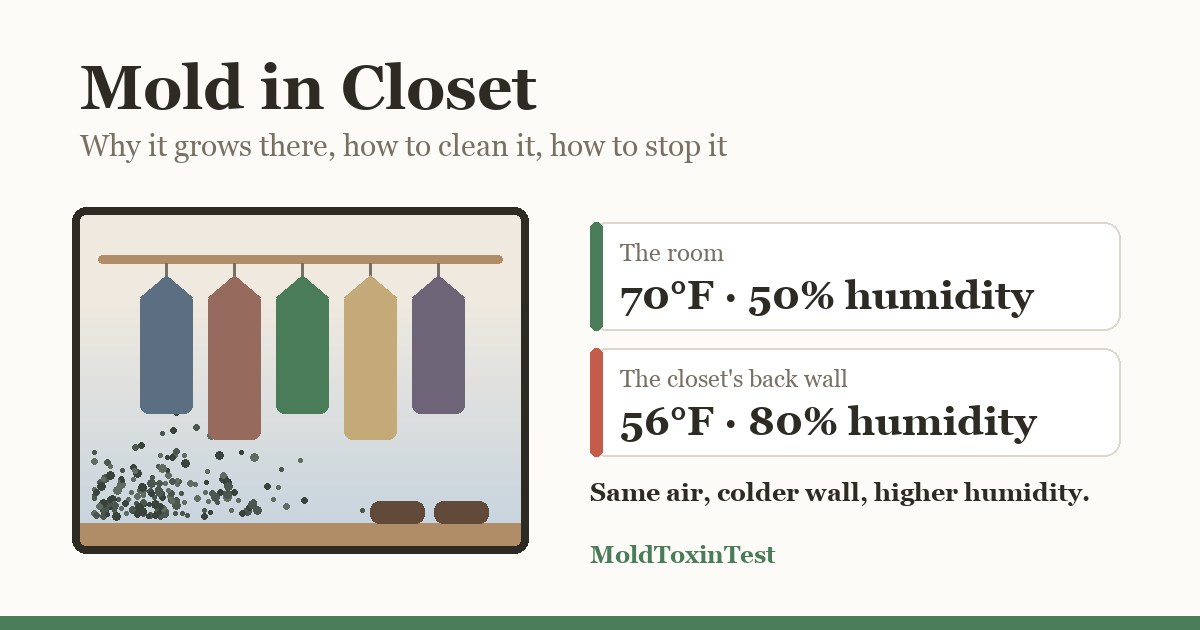
Mold in a closet usually means the closet is colder than the room it opens onto. The same air at a lower temperature reads a higher humidity. A back wall only 8°F cooler than a room at 60% humidity sits near 80%, where mold grows without any leak.
Small patches on a painted wall clean up with detergent and water or a mold cleaner, followed by a full dry. Washable clothes go through the hottest wash their labels allow.
The lasting fix is warmth and air reaching the wall. That means the door left open or swapped for a louvered one, hanging clothes two inches off the back wall, and room humidity under 50%. Growth around an air handler, or drywall that is soft or stained through, is a job for a professional.
Published November 12, 202619 min readEvidence-based
A closet holds some of the costliest things in a home that rarely get looked at. Winter coats, leather shoes, a suit and the spare bedding can sit behind a closed door for six months at a time.
That long, undisturbed stretch gives mold in a closet a head start. It begins low on the back wall or on whatever is pressed against it. The bedroom shows no sign of it until the door opens on a musty smell.
You may have pulled out a pair of shoes with a white bloom on them, or found gray spots on the wall once the coats came out. The room itself may look dry and measure a normal 50% humidity.
But why does this one closet grow mold in a room with no other sign of damp, and what keeps it from returning after you clean it?
Note: Mold and mould are the same word, spelled two ways, and a closet is a wardrobe in British English. This article uses the American spellings.
The closet is colder than the room, and that is enough
Mold on a wall needs the air touching that wall to stay above roughly 80% relative humidity. A closet reaches that figure while the room beside it reads 50%, because it is colder than the room.
Relative humidity rises as air cools. A bedroom at 70°F and 50% humidity holds air with a dew point near 50°F. That same air against a closet wall at 56°F reads about 80%, with no leak and no visible water. At 60% in the room, a wall only 8°F cooler than the room gets there.
The same room air, read against cooler walls
Room air at 70°F and 50% humidity. Humidity at the wall surface, by wall temperature.
70°F
50%The room itself
65°F
59%
60°F
71%
56°F
80%Mold can grow here
A closet on an exterior wall loses heat outward through that wall. The closed door keeps the room’s warm air out, and no register or radiator serves the space. Joseph Lstiburek of Building Science Corporation describes the exterior-wall closet as a classic cold-climate mold case.
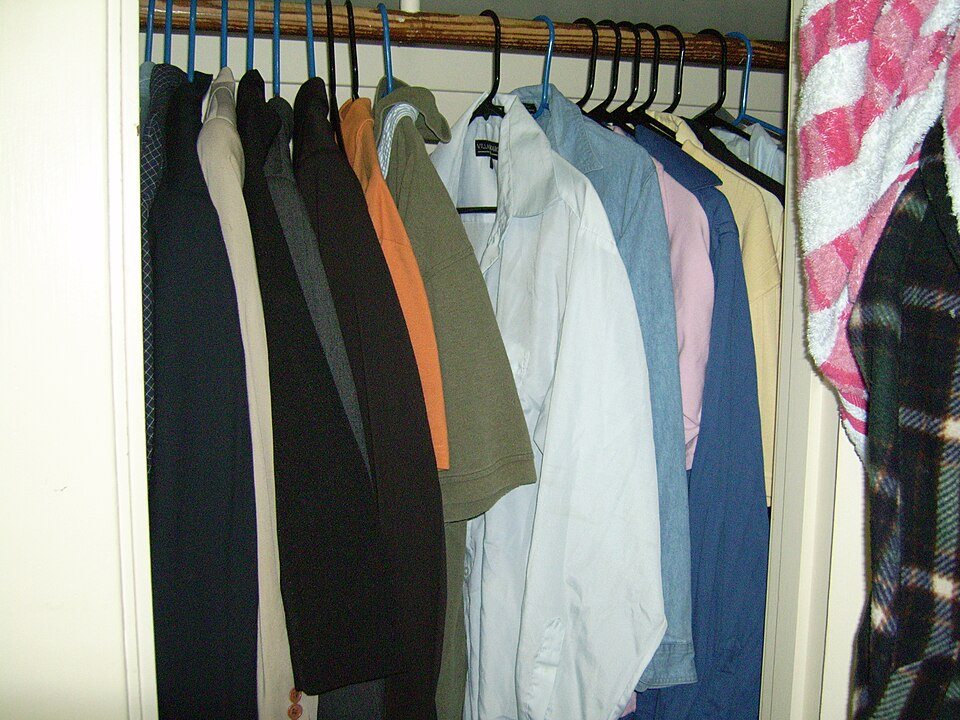
A full rail of coats pressed against the back wall adds to the cooling, because it works as insulation on the room side of that wall. The wall behind them drops closer to the outdoor temperature, and the damp, cold zone moves to the back of the garments themselves.
A full rail pressed toward the back wall works as insulation on the room side of that wall. Photo by Aavindraa, Wikimedia Commons, CC0.
Humid climates get there through air conditioning. In a house in the Southeast or along the Gulf, a closet under a well-insulated attic has almost no heat coming in. It cools to the temperature of the conditioned air and stays there. The humid indoor air of a mild, rainy week then brings its ceiling and upper walls to mold-growing humidity.
Air that moves carries heat to a surface and dries it, while air that sits lets the surface stay damp for days. A closet holds some of the stillest air in a house.
Where the mold is points to the cause
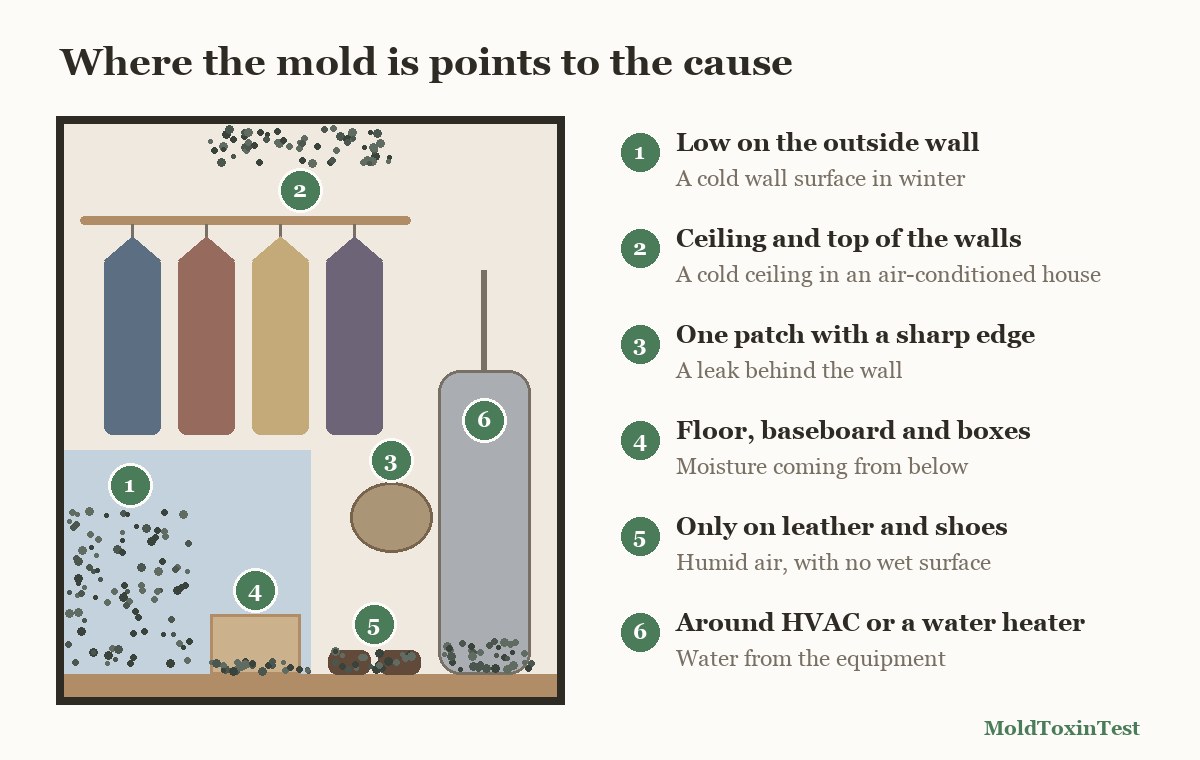
The location of the growth identifies the moisture source more reliably than its color or smell does.
The six places closet mold shows up, numbered in the order they are described below.
Low on an exterior wall, behind hanging clothes, worse in the corners. This pattern comes from a cold wall surface in winter. The growth is typically gray or black speckling in a band along the bottom two feet and up the corner, and it returns each cold season.
On the ceiling or the top of the walls in an air-conditioned house. The cause is a cold ceiling under attic insulation, or a supply register blowing chilled air into the closet. This pattern is common in humid-climate homes built or re-insulated in the last twenty years.
One patch with a defined edge, or a stain with a tide line. A sharp edge means a leak. A closet that shares a wall with a shower, sits under a bathroom or a roof valley, or has plumbing in the wall gets wet from the back. The drywall is often soft there, and a moisture meter reads high at the patch and normal a foot away.
On the floor, the baseboard and the bottom of stored boxes. Here the moisture comes from below. Carpet laid on a concrete slab, a basement or under-stairs closet, and cardboard boxes on a cool floor against an outside wall all produce it.
Only on leather, shoes, belts and bags, with clean walls. The air is humid, but no surface is wet. Leather and suede grow a white or pale green bloom at humidity levels too low for paint to mold. Mold on shoes in a closet is the early warning that its air sits above 65%.
Around the air handler, furnace or water heater. Condensate or a slow leak from the equipment is the usual source, covered in its own section below.
A cold exterior-wall closet in a house that also runs 60% in winter molds faster than either condition alone would produce.
White, black, green or brown: what the color tells you
Color comes from the species, its age and what it’s eating, and several common molds change color as they mature. It narrows the possibilities without identifying the mold.
White
Young growth, a bloom on leather, or mineral salt.
Gray to black specks
Cold-surface species on a painted wall.
Green or blue-green
Leather, stored fabric, cardboard and wood.
Brown or tan
Wood and particleboard, or a water stain.
Slimy black
Drywall or cardboard that stayed soaked, so a leak.
White. White growth is usually young, or it is the powdery bloom that forms on leather, shoes, wood hangers and the backs of furniture in humid air. On a masonry or concrete closet wall, a white crust that dissolves when wetted is efflorescence, mineral salt left by evaporating water. It signals moisture coming through the wall and isn’t alive. The white mold guide separates the two.
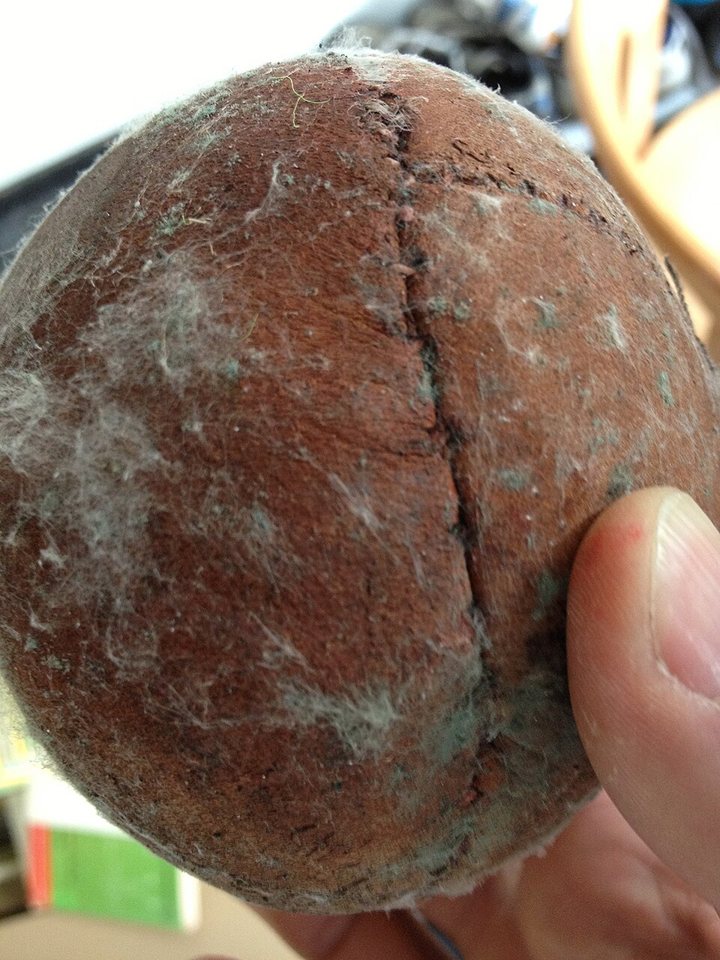
The white and pale green bloom on this leather ball is the same growth that forms on shoes, belts and bags in humid closet air. Photo by Amada44, Wikimedia Commons, CC BY-SA 4.0.
Gray, dark green or black specks on a painted wall. This is what black mold in a closet usually looks like on a cold wall. Species that tolerate cool, intermittently damp surfaces produce it, and it sits on the paint film at first.
Green or blue-green, fuzzy or velvety. Green mold in a closet typically grows on leather, stored fabric, cardboard and wood shelving.
Brown or tan. Brown patches are often growth on wood, particleboard shelving or the paper face of drywall, and sometimes a water stain with no growth at all.
Slimy black on drywall or cardboard that has been wet for a week or more. This is the pattern associated with Stachybotrys, the mold people mean by "black mold". It needs soaked cellulose rather than humid air, so it points to a leak. A black speckle on a dry painted wall is usually one of the cold-surface species.
A lab test can name the species, and it rarely changes what you do next. The moisture source decides the fix, and the size and depth of the growth decide who does the cleanup. The mold detector reads a photo and tells you whether a mark is growth or a stain.
The first hour after finding mold in a closet
Dry mold releases spores when disturbed, so the first hour is for containing it. An armful of clothes pulled off the rail and carried through the house leaves spores in every room on the way.
1Close the bedroom door and open a window in the room if the weather is dry. Switch off the central air or heat while you work so the system doesn’t pull spores into the return.
2Put on an N95 mask and gloves. Goggles help if the growth is overhead.
3Take a few photos of the wall and the affected items before moving anything. They help a landlord, an insurer or a contractor later, and they show where the growth was heaviest.
4Bag the clothes, shoes and linens inside the closet, in trash bags tied shut, and carry the bags straight to the laundry or outdoors.
5Bag cardboard boxes, paper and anything visibly moldy that you won’t be cleaning, and take it out of the house.
6Check the wall with your hand and, if you have one, a moisture meter. A dry, firm wall with surface specks is a cleaning job. A soft, crumbling or wet wall has a leak behind it.
The EPA’s guidance sets the do-it-yourself limit at about 10 square feet of growth, roughly a three-foot square. A back wall speckled from floor to ceiling is past that.
Cleaning mold off closet walls, shelves and floor
A closet wall with surface growth on sound, painted drywall cleans up in an afternoon. The work is removing the growth, drying the surface fully, and leaving nothing damp behind.
1Run a HEPA vacuum over the walls, shelves, rod and floor before any wet cleaning. It lifts loose spores and dust that a wet cloth would smear.
2Wipe hard surfaces with detergent and warm water, the EPA’s recommendation for nonporous and painted surfaces. An EPA-registered mold cleaner such as Concrobium, sprayed on and left to dry, is the alternative. Work from the clean edge toward the heaviest growth, and change cloths often.
3Skip bleach on drywall and wood. It lightens the stain while its water soaks into the material, and it adds fumes to a space with no ventilation.
4Take out wire shelving and wash it in a tub. Wipe melamine shelves on all faces, including the cut edges and the underside.
5Check particleboard and MDF shelving at the edges. Swollen or fuzzy edges mean the board has taken up water, and it goes in the trash.
6Lift the corner of any carpet. Growth on the backing or the tack strip, or a damp pad, means the carpet in the closet comes out.
7Dry the empty closet with a fan aimed in and the door open for 24 to 48 hours. A dehumidifier in the room shortens that.
8Confirm the wall is dry before anything goes back. A moisture meter reading that matches a dry interior wall is the test.
Staining left on the paint after cleaning is cosmetic. A stain-blocking, mold-resistant primer and a coat of paint cover it once the wall is dry, and the removing mold from walls guide covers primers and repainting. Paint over live growth peels within months.
Drywall with growth inside it can’t be cleaned. Board that is soft, swollen, stained through to the back, or wet on a meter has growth in its paper and core. That section gets cut out and replaced after the leak is fixed. For darker, heavier growth, the black mold removal spray guide compares the cleaners.
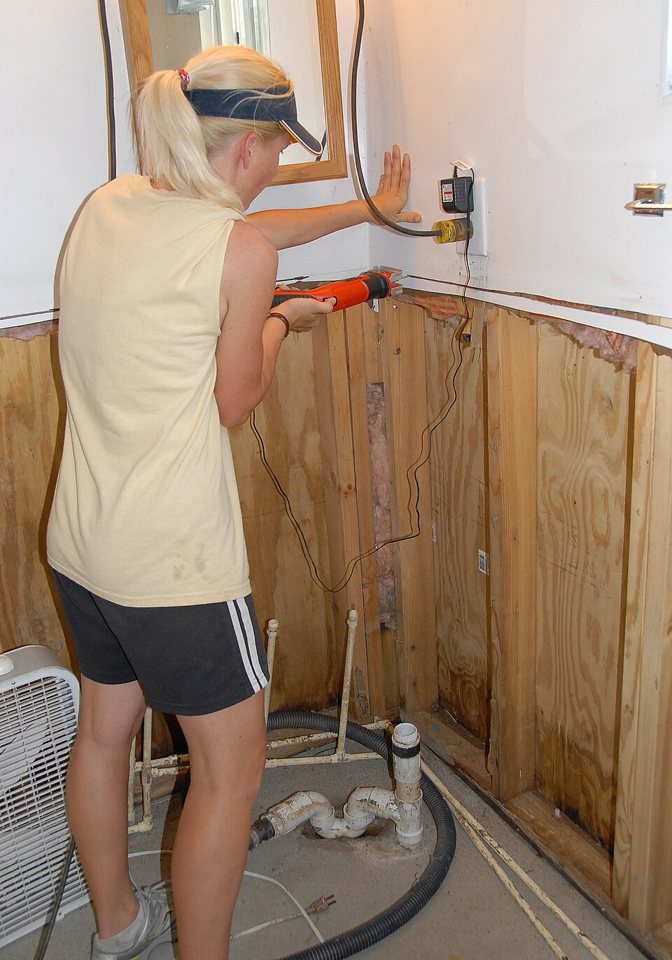
Drywall that has been soaked gets cut out and replaced, as in this flood repair. Photo by Marvin Nauman for FEMA, Wikimedia Commons, public domain.
Clothes, shoes and bags from a moldy closet
Mold on clothes in a closet, and on the shoes and bags stored with them, sorts the contents into washable, cleanable by hand, and gone.
Washable
The hottest wash the care label allows.
Dry-clean-only
A cleaner, with the mold pointed out.
Leather
A brush, an alcohol-and-water wipe, drying and conditioner.
Replace
Cardboard, paper, foam hangers and shoes molded through.
Washable clothes, bedding and towels go through the hottest wash their care labels allow, with the bags emptied straight into the machine. Items that smelled musty but showed no spots get washed too, since they’ve been collecting spores from the same air. The mold on clothes guide covers the method fabric by fabric, including what to add to the wash and how to treat stains that remain.
Dry-clean-only pieces such as suits, wool coats and silk go to a cleaner with the mold pointed out. Brushing them off outdoors first keeps loose growth out of the car and the shop.
Leather shoes, belts, bags and jackets with a surface bloom can usually be saved. A soft brush outdoors takes off the loose growth. A cloth dampened with equal parts rubbing alcohol and water wipes the rest, inside and out, and the item then dries in moving air away from direct heat. A leather conditioner afterward replaces the oils the alcohol removes.
Suede takes a suede brush and a specialist cleaner.
Cardboard boxes, paper, foam-padded hangers, and shoes whose insoles or linings have molded through are cheaper to replace than to clean. So is anything that still smells musty after two cleanings, since the odor means growth inside the material.
Suitcases stored on a closet floor or top shelf can mold inside without showing it. Fabric linings and the board stiffeners behind them mold readily, and a moldy case re-seeds every trip’s clothes.
Nothing goes back until the closet is dry and the cause is dealt with. Clean clothes returned to a cold, damp closet will smell again within weeks.
Mold in an HVAC, AC or water heater closet
A closet that holds an air handler, a furnace or a water heater has liquid water in it during normal operation. Mold in an HVAC or AC closet usually traces to the equipment rather than to a cold wall.
An air handler’s cooling coil pulls gallons of water out of the air on a humid day. That water drips into a pan and leaves through a drain line.
A line clogged with algae, a cracked or rusted pan, or a line that has lost its slope sends that water elsewhere. It ends up on the closet floor and in the platform the unit sits on. Standing water in the pan, a wet floor, rust streaks on the cabinet, or a float switch that keeps shutting the system off are the signs.
Standing water in the pan A wet floor Rust streaks on the cabinet A float switch that keeps shutting the system off
Cold metal sweats in a humid closet. A poorly insulated refrigerant line, the outside of the supply plenum and the cabinet itself all collect condensation. A door louvered to a humid garage or hallway makes it worse.
The return air path brings in more moisture. Many air handler closets are the return plenum: the closet is open to the unit’s intake and draws house air through a grille or a louvered door. Gaps in the closet’s walls or ceiling then pull air from the attic, a crawl space or a wall cavity, which brings humid, dusty air across cold metal.
The blower draws air through this closet and sends it to every room. Spores from a moldy platform or closet wall therefore reach bedrooms far from the unit.
The repair belongs to an HVAC technician. It covers clearing and re-sloping the drain, replacing a failed pan, insulating the lines, and sealing the closet from the attic and crawl space. The coil and blower get checked for growth at the same visit.
The mold in air vents guide covers what to look for at the registers. Wiping the closet walls without fixing the water lasts until the next humid week.
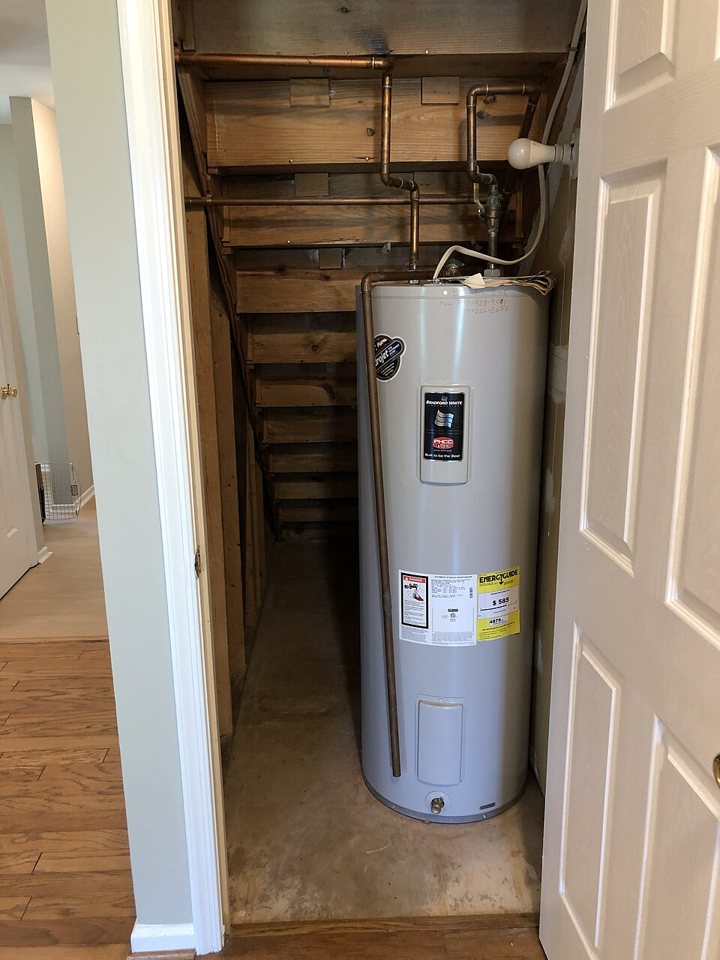
In a water heater closet, a slow leak at the tank, the fittings or the relief valve is a common source of mold. Photo by Famartin, Wikimedia Commons, CC BY-SA 4.0.
A water heater closet molds from a slow leak at the tank, the fittings or the relief valve discharge, or from a gas heater venting poorly. A pan under the tank with water in it, or mineral tracks down the side of the tank, calls for a plumber.
Mold behind and inside a freestanding wardrobe
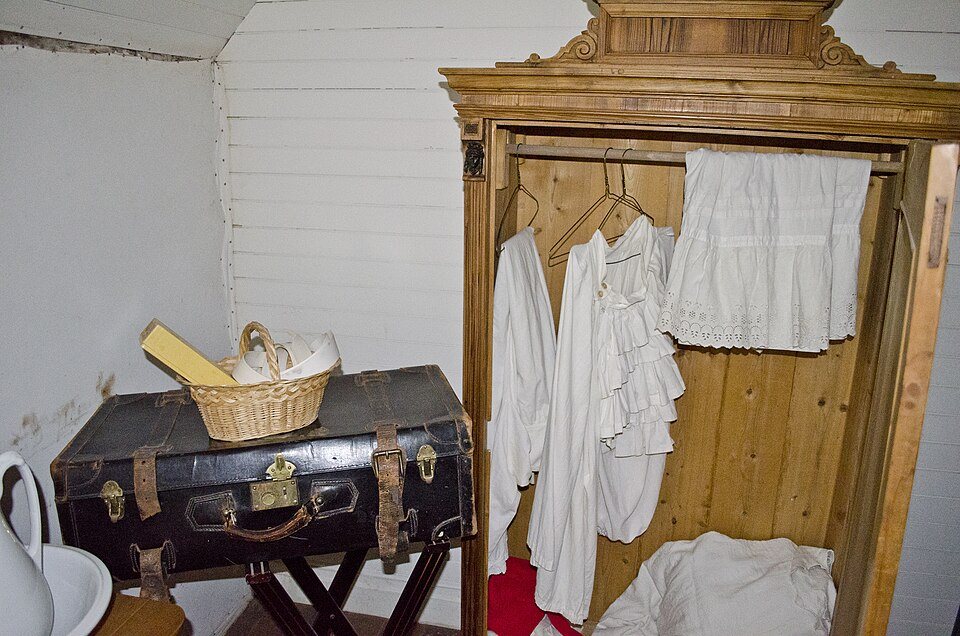
A freestanding wardrobe or armoire against an outside wall creates the same cold, still pocket as a closet. The wall behind it gets no room air and no heat. The thin back panel of the wardrobe sits a half inch from the coldest surface in the room.
A wardrobe pushed against a wall leaves a still pocket of air behind its thin back panel. Photo by Tim Evanson, Wikimedia Commons, CC BY-SA 2.0.
The wall behind the wardrobe speckles black or gray in the shape of the furniture. The back panel, usually hardboard or thin plywood, grows a white or green fuzz on the side facing the wall. Later it shows on the inside, where it reaches the clothes.
Moving the wardrobe to an interior wall usually stops the growth. Where it has to stay, a gap of three to four inches between its back and the wall lets room air reach both surfaces. Short legs or blocks that lift it off the floor let air pass underneath.
The wall cleans like any painted wall. The back panel is harder: hardboard that has molded through is porous and thin, and replacing the panel is often easier than cleaning it. A new panel sealed with primer on both faces resists the next damp season better than bare board.
A bed, a dresser or a bookcase pushed tight to an exterior wall behaves the same way. The dew point calculator shows the wall temperature at which your room’s air starts to condense, which tells you how much margin a given wall has.
Closet mold prevention: warmth, airflow and humidity
Preventing closet mold means lowering the humidity at the closet’s coldest surface. More heat reaching that surface, air moving across it, and less water in the room’s air all do that.
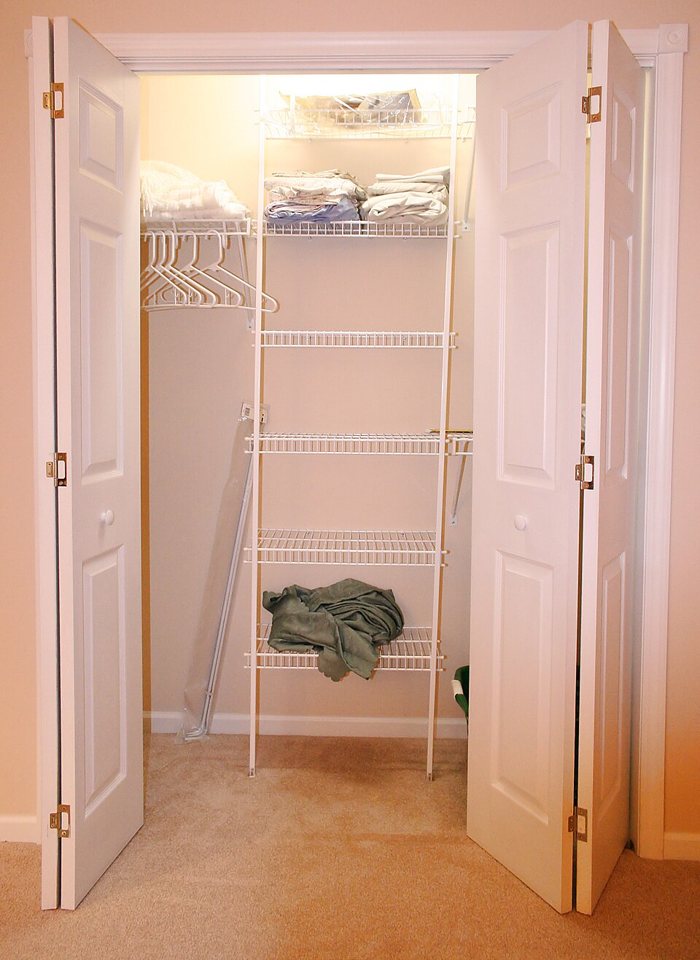
Open doors let the room’s warm air into a reach-in closet, and wire shelving lets that air pass through. Photo by Tysto, Wikimedia Commons, public domain.
Leave the door open, or take it off. An open door lets the room’s warm air circulate into the closet, which raises the wall temperature and drops the humidity at its surface. Building scientist Allison Bailes rates an open door above a louvered one, and no door above both. One commenter on his article said his daughter in Florida had removed every closet door in her house.
Fit a louvered door or a grille where the door has to close. Louvered bifold doors are the long-standing fix. A door undercut by an inch and a half, or a transfer grille of about 30 square inches in the door or wall, gives air a path. In cold and dry climates that passive path is usually enough.
Move the clothes off the back wall. A rod set so that hanging clothes clear the exterior wall by two to three inches leaves an air channel where the wall needs it. Thinning the rail so garments don’t press together does the same between the clothes.
Clear the floor. Shoes on a rack and boxes on a shelf keep fabric and cardboard off the coldest, dampest surface. Plastic bins with lids protect what has to sit low, as long as the contents went in dry. Wire shelving lets air through where solid shelving blocks it.
Put only dry things away. A coat hung up wet from rain, gym shoes, a damp towel, or laundry pulled from the dryer early adds water to a space that can’t shed it.
Bring the room’s humidity under 50%. Every point taken off the room’s humidity comes off the closet wall’s too. In winter that means bath fans and less indoor laundry drying. In a humid summer it means the air conditioner set up properly, or a dehumidifier in the bedroom. The reduce humidity in house guide ranks those fixes by how much water each one moves, and the dehumidifier for bedroom guide covers the machine.
Dry the closet air directly where the room can’t be fixed. A rechargeable silica dehumidifier or a calcium chloride bag lowers humidity inside a closed closet, which is the scale those products are built for. They help most with shoes, leather and stored fabric, and less with a cold wall, because they dry the air without warming the surface.
Measure for a week. A small hygrometer on a closet shelf, read each morning, shows whether the changes worked. A closet that stays under 60% with the door in its normal position is unlikely to grow mold. One that still reads 70% needs the next step.
Warm the wall. Rigid foam board on the inside of an exterior closet wall, even three-quarters of an inch, warms the surface that the closet air touches. A commenter on Energy Vanguard’s closet article reported no more moldy clothes after adding 20 mm of rigid foam, a fan and a little heat. Insulating the wall cavity or the exterior is the fuller version of the same fix.
Add a small return in a humid climate. Where closets mold on the ceiling in an air-conditioned house, passive grilles are inconsistent. Lstiburek’s recommendation there is a small return duct that pulls a little air through the closet. According to Energy Vanguard, the 2024 residential code permits it, up to 30 cubic feet per minute. An HVAC contractor installs it.
A supply register does the opposite: it chills the closet and makes ceiling mold more likely, so closing a closet supply in summer is a reasonable first test.
Products that help
Ratings come from the Amazon listings as checked in October and early November 2026.
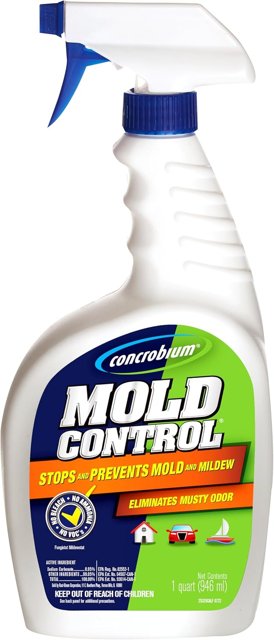
Concrobium Mold Control
Mold cleaner
Type
EPA-registered
Bleach
None
Use
Spray, leave to dry
Rating
4.0 (2,600+)
Concrobium is an EPA-registered mold cleaner with no bleach and no fumes, which suits an unventilated closet. It’s sprayed on, left to dry, and leaves a film that resists regrowth on the cleaned surface.
It works on painted drywall, wood, shelving and the outside of luggage. It won’t lift dark staining, which takes primer and paint. Rated 4.0 stars from more than 2,600 buyers.
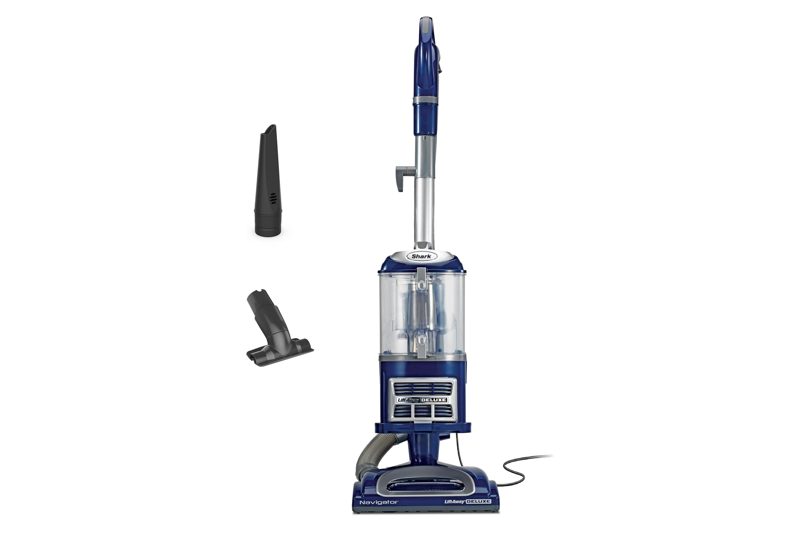
A sealed HEPA vacuum captures spores where a standard vacuum blows them out of its exhaust. The NV360’s canister lifts off for shelves, corners and the closet ceiling. The dust cup gets emptied outdoors after a mold job, and the filters rinsed. Rated 4.3 stars from more than 55,000 buyers.
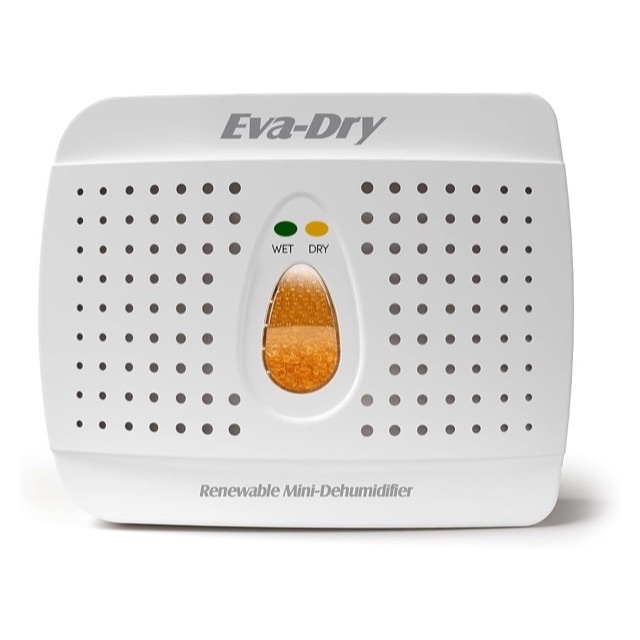
The Eva-Dry is a sealed box of silica beads that hangs on the rod or sits on a shelf and absorbs moisture for three to four weeks. An indicator window changes color when it’s full, and a night plugged into a socket dries it for reuse. It makes no noise, uses no power in the closet and has nothing to spill.
It suits a reach-in closet or a wardrobe; a walk-in takes two. Rated 4.2 stars from more than 35,000 buyers.
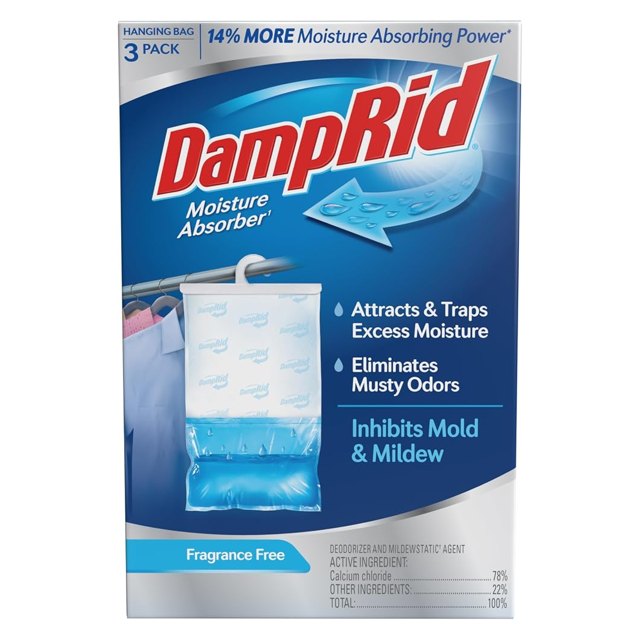
The DampRid bag hangs from the rod and pulls water from the closet air into a sealed pouch. It collects about a pint over one to two months in a humid season. The collected water makes the result visible, which is useful for judging how damp a closet runs.
The bags are disposable, and the fragrance-free version keeps scent off the clothes. Rated 4.7 stars from more than 5,000 buyers.
A three-pack covers the closet shelf, the bedroom and a second closet or the basement. The gap between the closet reading and the room reading explains the mold. Ten points higher in the closet means a cold or still space.
Each reads temperature and humidity with a dry, comfortable or wet indicator. Rated 4.6 stars from more than 8,000 buyers.
As an Amazon Associate we earn from qualifying purchases, at no extra cost to you.
When closet mold needs a professional
Size, depth and location decide whether a closet is a weekend job or a contractor’s.
Growth covering more than about 10 square feet.
Drywall that is soft, swollen or wet.
A closet holding an air handler or furnace.
Mold that returns within a season after a thorough cleaning.
Growth covering more than about 10 square feet, the EPA’s threshold, calls for containment and equipment a household doesn’t own. So does drywall that is soft, swollen or wet, since the growth continues inside the wall and the leak behind it has to be found. A closet holding an air handler or furnace needs an HVAC technician before any cleaning lasts.
Mold that returns within a season after a thorough cleaning means the cause is still active. A remediation contractor or a home performance contractor can measure surface temperatures, find the air leak or the missing insulation, and fix the wall rather than the symptom. The black mold remediation guide covers what a proper job includes and what it costs.
For renters, a cold exterior wall, a leak from the unit above and a failed condensate drain are building defects. Photos, a dated hygrometer log and a written notice are what move a landlord. Cleaning the surface and opening the door are within a tenant’s reach in the meantime.
Anyone with asthma, a mold allergy or a weakened immune system is better off leaving the cleanup to someone else, whatever the size.
When the closet has been moldy for a while
A bedroom closet shares its air with the person sleeping eight feet away, and clothes stored in it carry spores onto skin and into every room. A closet that has been growing mold for a season has added to what the household breathes for that whole time.
The conditions behind one moldy closet usually extend past it. The same cold wall runs behind the bed and the dresser, and the same humid air reaches the window sills, the bathroom ceiling and the mattress. A musty smell that remains after the closet is clean points to a second site.
Mold in a closet has a specific cause. A warmer wall, moving air and a drier room keep the same closet clean.
The screening runs in your browser and takes about fifteen minutes from calibration to result.
Why is there mold in my closet but not in the rest of the room?
The closet is colder and its air doesn’t move. Air at the same moisture content reads a higher relative humidity at a lower temperature. A closet wall a few degrees cooler than the room can sit at 80% while the room reads 50 to 60%. Building Science Corporation describes the exterior-wall closet as a classic case.
What should I do with clothes from a moldy closet?
They go into bags inside the closet and then straight to the machine. Everything washable gets the hottest cycle its label allows, including items with no visible spots. Dry-clean-only pieces go to a cleaner. Anything that still smells musty after two cleanings has growth inside the fibers and is better replaced.
How do I get rid of mold on closet walls?
Surface growth on sound painted drywall takes a HEPA vacuum first, then detergent and water or an EPA-registered mold cleaner. After that, 24 to 48 hours of drying with a fan and the door open. Drywall that is soft, swollen or wet gets cut out and replaced once the leak is fixed. The EPA puts the do-it-yourself limit at about 10 square feet.
Is mold in a closet dangerous?
It affects people differently. Mold exposure can cause congestion, coughing, wheezing, and eye or skin irritation, and it tends to hit people with asthma, allergies or weakened immunity harder. A bedroom closet shares air with the bed, and moldy clothes carry spores around the house, so it’s better cleaned promptly than left.
Is black mold in a closet the toxic kind?
Usually it isn’t. Black or dark gray speckling on a cold, dry-feeling painted wall is typically a species that grows on condensation. Stachybotrys, the mold the phrase refers to, needs cellulose that has stayed soaked for a week or more, so it appears with leaks, on wet drywall or cardboard. Any mold is cleaned the same way, and the moisture source decides the fix.
What is the white fuzzy mold on shoes in my closet?
A surface bloom of mold feeding on leather’s oils and finishes in humid air. Leather molds at lower humidity than painted walls do, so moldy shoes with clean walls mean the closet air sits above about 65%. A brush outdoors, a wipe with diluted rubbing alcohol, thorough drying and conditioner save most pairs.
How do I stop mold in a closet on an exterior wall?
Heat and air reaching the wall stop it. That means the door open or louvered and hanging clothes two to three inches off the back wall. Nothing sits against the wall on the floor, and room humidity stays under 50%. Where that falls short, rigid foam insulation on the inside of the wall raises its surface temperature.
What humidity should a closet be?
Under 60%, and close to the room’s own reading. A hygrometer on a closet shelf for a week shows it. A closet reading ten points or more above the room is cold, still, or both.
Do moisture absorbers stop closet mold?
They lower humidity in a closed closet enough to protect shoes, leather and stored fabric. They do less for a cold wall, because they dry the air without warming the surface, and they do nothing for a leak. They work alongside airflow rather than in place of it.
Why is there mold in my HVAC or AC closet?
Water from the equipment. A clogged condensate drain, a cracked drain pan, sweating refrigerant lines or humid air drawn in through gaps to the attic all wet the closet. Because the blower pulls air through that space, an HVAC technician should fix it before the surfaces are cleaned.
How do I stop mold behind a wardrobe?
Moving it to an interior wall works best. Failing that, a gap of three to four inches off the exterior wall lets room air reach the wall and the back panel. Lifting it on legs helps air pass beneath. A molded hardboard back panel is easier to replace than to clean.
What are the signs of mold in a closet?
A musty smell when the door opens, and clothes that smell stale after hanging for a week. A white or green bloom on leather shoes and belts. Gray or black specks low on the back wall or in the corners, and peeling paint or a damp feel on the wall behind the clothes.
Can I paint over mold in a closet?
Only after it’s cleaned off and the wall is dry. Paint over live growth blisters and peels within months, and the mold continues underneath. A stain-blocking, mold-resistant primer on a clean, dry wall, followed by paint, covers the leftover staining.