Mold in Air Vents: Where It Actually Grows and What Fixes It
Mold in air vents is almost always spotted at the register, which is rarely where it started growing. Air moves from the equipment through the ducts and out the register, so spores and moisture arrive at the vent last. That distinction decides everything that follows, because cleaning the grille you can reach does nothing if the source sits at the cooling coil ten feet upstream.
This guide covers how to tell whether you genuinely have mold in your air vents, where in the system it tends to live, what actually removes it in each case, and why it so often comes back. One quick note first, since it confuses people searching: mold and mould are the same thing, the first spelling American and the second British, so a search for a mouldy air con and one for a moldy AC vent land on the same problem.
Why vents are where you notice it
A forced-air system is a loop. The air handler pulls air across a cooling coil, pushes it through supply ducts, and delivers it through registers in each room. Mold needs moisture and something organic to feed on, and the wettest part of that loop is not the duct. It is the coil.
Cooling coils exist to pull water out of the air, so they run wet by design, dripping condensate into a pan below that drains away through a line. Research cited in the EPA's guidance on duct cleaning identifies condensation on and near cooling coils as a major factor in moisture contamination of HVAC systems. When that drain pan holds standing water, or the condensate line clogs, or the coil stays damp with dust settled on it, you have created ideal growing conditions inside the equipment. The spores then travel the same path the air does and settle where the air slows down, which is at the register.
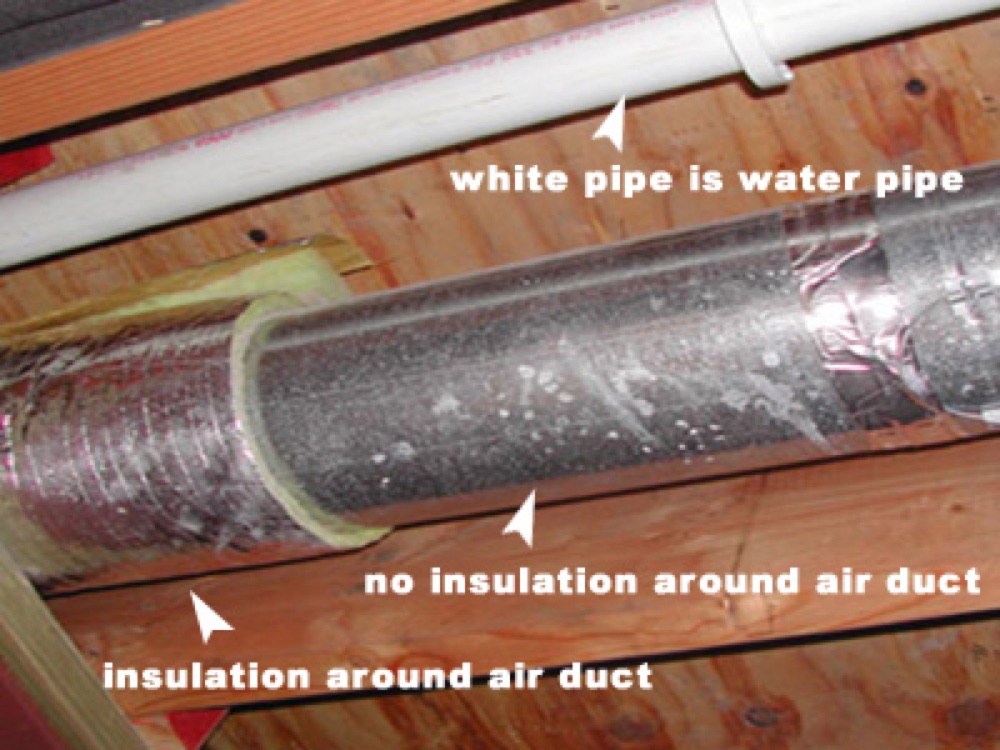
Ducts themselves are usually the transport, not the nursery. Mold in HVAC ducts matters when they are lined with fiberglass insulation, when a duct runs through an unconditioned attic or crawlspace and sweats, or when a leak lets humid air in. Bare sheet metal in a dry, conditioned space rarely grows anything on its own, which is why moldy vents in one room and clean ducts throughout the rest of the house is a common and perfectly logical combination.
What causes mold in air vents and ducts
Six conditions account for most cases, and they are worth checking by name because each has a different fix.
Leaves standing water in the drip pan under the coil, which is the single most common source.
Gives spores both moisture and a bed of dust to feed on.
Short-cycles, cooling the air fast without running long enough to pull humidity out, so the whole house stays damp.
Sweat where they meet cooler air, wetting insulation from the inside or out.
Pull unconditioned humid air directly into the system.
Let dust load onto the coil and the duct walls.
High indoor humidity sits behind all of them. Above roughly 60 percent relative humidity, condensation forms readily on cool surfaces like registers and supply ducts, and growth follows.
Is it actually mold in your vents
Not every dark mark at a register is fungal growth. Registers collect dust, and the airflow pattern deposits it in streaks along the louvers that look convincingly like growth. Soot from candles or a fireplace does the same thing. If the colour is what worries you, the growth found on vents is more often Cladosporium than the species people mean by black mold in air vents, and that piece works through why the distinction changes less than it seems to.
A few signals separate the two. Genuine growth usually has texture and depth, either fuzzy or slick, rather than the flat, even film that dust leaves. It tends to concentrate where condensation forms, so a register that runs cold and sweats in a humid room is a more likely site than one in a dry hallway. Dust wipes off cleanly and leaves clean metal underneath, while growth that has taken hold on a painted or porous surface smears and returns. The technique is the same one covered in our guide to telling mold from mildew, and it applies just as well to a vent cover as to a bathroom wall.
The stronger clues are systemic rather than visual
A musty smell that appears or intensifies when the system kicks on points at the equipment, because you are smelling what the airflow is carrying. Fine dark particulate blowing from supply registers, sometimes mistaken for soot, can be dried fragments being shed downstream. Symptoms that improve when the system is off, or when people leave the building, and return once it runs again suggest that whatever is growing is being distributed rather than sitting in one room.
Where it lives, and what that means for the fix
The useful question is not whether you have mold in the ducts. It is which part of the system holds it, because the answer changes what works. Three zones cover almost every case of mold in air vents, and identifying yours tells you whether this is an afternoon with a screwdriver or a call to a contractor.
This is surface growth on a hard, non-porous grille, usually condensation-driven in a humid room, and it is the one case a homeowner can reasonably handle.
Bare sheet metal can be cleaned. Duct cleaning is warranted when there is substantial visible mold growth inside hard surface ducts or on other system components. That is a specific threshold rather than a routine maintenance recommendation.
If insulated air ducts get wet or moldy, the insulation cannot be effectively cleaned and should be removed and replaced. The same logic applies to a contaminated coil, drain pan, or blower housing.
Cleaning a register yourself
The steps are simple enough to do in an afternoon. Turn the system off first so you are not pushing what you disturb through the house. Put on an N95 respirator, gloves, and eye protection, because scrubbing releases spores into the air you are leaning over. Unscrew the register cover and take it outside or to a utility sink. Wash it with detergent and warm water, using a brush on the louvers where growth collects, and skip the bleach, since it adds moisture without offering any advantage on a hard surface that scrubs clean. If you would rather use something from the cupboard, our guide to natural methods for removing black mold covers which household options hold up and which do not. Wipe the visible duct opening just inside the register with a damp cloth, and stop there rather than reaching deeper. Dry the cover completely before reinstalling it, since a damp cover starts the cycle again. Then deal with why that spot condenses in the first place, which usually means humidity control rather than anything mechanical.
Call a professional instead if
- Growth extends past arm’s reach into the duct
- You can see it on the coil or in the drain pan
- The ducts are internally lined with fiberglass
- It returns within weeks of cleaning
- Anyone in the house has asthma or a weakened immune system
The EPA's guidance on whether you should have the air ducts in your home cleaned states that duct cleaning is warranted when there is substantial visible mold growth inside hard surface ducts or on other system components, and it is worth knowing because most of the industry marketing around moldy air ducts implies otherwise. The EPA is equally direct on porous material, and a duct-cleaning visit that ignores a fouled coil and a standing-water drip pan leaves the source running.
Should you keep running the system
Turning the system off while you assess it is the sensible default when you suspect growth inside the equipment or ducts, because running it distributes spores through every room the ductwork serves. That is the specific risk that makes HVAC contamination different from a patch on a bathroom ceiling. A wall stays where it is, whereas an air handler delivers.
If the weather makes shutting down impractical, running the fan less, keeping indoor humidity down, and getting the system inspected promptly is a reasonable middle path. The judgment call is about how much of the system is involved, which is exactly what a proper inspection determines.
Why it keeps coming back
Recurrence is the most common complaint after a duct cleaning, and the reason is straightforward. The EPA notes that if the conditions causing the mold growth are not corrected, growth will recur. Cleaning removes what has grown. It does not remove the water that grew it.
The moisture sources worth checking are specific. A clogged or improperly sloped condensate drain line leaves the pan holding water. An oversized system short-cycles, cooling the air quickly without running long enough to dehumidify it, which leaves the whole house damper than it should be. Ducts running through hot, humid attics or crawlspaces sweat on the outside and, where insulation has failed, on the inside. Leaky return ducts pull unconditioned humid air straight into the system. Filters left in past their service life let dust load onto the coil, giving spores both a surface and a food source.
Fixing the mechanism is what makes the cleaning hold. Keeping indoor relative humidity between 30 and 50 percent, changing filters on schedule, and confirming that the condensate line actually drains are the routine measures that keep the coil from becoming a growth site again.
The health side
Air distributed through ducts reaches every room served by the system, so contamination inside an air handler produces a lower-grade, whole-house exposure rather than a localized one. The common effects are the familiar allergic and respiratory ones: congestion, coughing, sneezing, irritated eyes, throat irritation, and worsening asthma, hitting hardest in children, older adults, and anyone with existing respiratory disease or a weakened immune system.
Longer exposure in a home with a persistent problem is also associated with the vaguer complaints people rarely connect to their air conditioning, including headaches, poor sleep, and a fatigue that rest does not resolve. If those track your time in the building, comparing them against the symptoms associated with mold toxicity is a reasonable next step, and the free visual contrast sensitivity screen gives you an objective reading in about fifteen minutes rather than another round of guessing.
Where several people in the same building report the same thing at the same times of day, the air handler is a stronger suspect than any one person. Our guide to sick building syndrome covers the four causes worth ruling out in order, and why a carbon dioxide monitor settles the most common one in a day.
If symptoms ease when the system is off or when you leave the building, the Visual Contrast Sensitivity test measures a neurological effect of biotoxin exposure that most people cannot notice on their own. Free, in your browser, about 15 minutes.
Prevention that actually works
Everything that prevents moldy AC vents comes back to keeping the wet parts of the system dry and the surfaces clean.
If an inspection finds growth beyond a register or two, treat it as a remediation job rather than a cleaning job, and read our black mold remediation guide for how containment and material removal are handled properly. What that work costs, and how to read a quote that leaves the moisture source out, is covered in air duct mold removal. The order that matters is always the same: find the water, fix the water, then clean or replace what it damaged.
The decision, in one line
If the growth is on a register you can unscrew and the room it sits in runs humid, treat it as a cleaning and humidity problem. If it extends into the ductwork, sits on the coil or in the drain pan, or has reached lined insulation, treat it as a moisture and equipment problem that cleaning alone will not settle. Almost every case of mold in air vents resolves once you answer that question honestly and fix the water before the surface.
Frequently asked questions
How do I know if I have mold in my air vents?
The reliable signs are a musty smell that appears or strengthens when the system runs, textured growth around registers that returns after wiping, dark particulate blowing from supply vents, and symptoms that ease when the system is off. Flat, even discoloration that wipes off cleanly is usually dust or soot rather than growth.
Can I clean mold in air ducts myself?
You can clean a removable register or grille with detergent and water. Growth inside the ductwork, on the cooling coil, in the drain pan, or on duct insulation is beyond a DIY job, because porous insulation cannot be cleaned effectively and contaminated equipment needs proper servicing.
Should I run my AC if there is mold in the vents?
Turning it off while you assess the extent is the safer default, since running the system distributes spores to every room the ducts serve. If shutting down is impractical, limit runtime, control humidity, and get it inspected quickly.
Does duct cleaning get rid of mold for good?
Only if the moisture source is corrected. The EPA notes that growth recurs when the underlying conditions are not fixed, which is why a clogged condensate line, a sweating duct, or a fouled coil has to be addressed alongside any cleaning.
Why does mold keep coming back in my AC vents?
Water is still present somewhere in the loop. The usual culprits are a blocked or poorly sloped condensate drain, an oversized system that cools without dehumidifying, ducts sweating in a hot attic or crawlspace, leaky returns pulling in humid air, and overdue filters loading the coil with dust.
Can mold in air conditioner vents make you sick?
It can contribute to allergic and respiratory symptoms, and because a forced-air system distributes air to every room it serves, contamination in the AC ducts or air handler produces a whole-house exposure rather than a localized one. The people affected first are children, older adults, and anyone with asthma or a weakened immune system.
Is black mold in vents more dangerous than other mold?
Color alone does not establish species or risk. What matters more is the extent of the growth, whether it sits in porous material or on the equipment, and who is breathing the air, since children, older adults, and people with asthma or immune conditions react at lower exposures.
Sources
Test Yourself Against Mold Toxicity
The Visual Contrast Sensitivity test measures a neurological effect of biotoxin exposure that most people cannot notice on their own. Free, online, and under 15 minutes.