Best Dehumidifier for Bedroom: Which one is Quiet Enough to Sleep Beside
Quick answer
For a standard bedroom, the hOmeLabs 25-pint is the best dehumidifier: compact, drain-ready, with a Wi-Fi app for setting the target from bed. A master bedroom or an open-plan upstairs suits the hOmeLabs 32-pint. For a bedroom that drops below 60°F in winter, the AEOCKY desiccant keeps extracting where compressors frost, and it runs quieter on low.
A humidistat setting of 45 to 50% keeps the room comfortable rather than dry. Six feet from the bed with the exhaust facing away keeps it quiet. A connected drain hose lets it run all night without stopping on a full tank.
Published October 14, 202616 min readEvidence-based
A bedroom can be the dampest room in the house for eight hours a night. Two sleepers breathe out and sweat close to a liter of water between them. With the door shut and the heating off, most of it stays in the air until morning.
In a dry house that water clears by midday. In a humid climate, a basement bedroom or a room on a cold outside wall, it doesn’t. Windows stream, the bedding feels heavy and a wardrobe against the wall starts to smell. Humidity sits above 60% all night, which is where dust mites multiply and mold starts.
You may have tried a dehumidifier already and found it louder than the bedroom can take, or woken with a dry throat and switched it off.
But which dehumidifier for a bedroom is quiet enough to sleep beside, and how do you run it so it dries the room and not you?
Note: Mold and mould are the same word, spelled two ways. This article uses the American spelling.
What bedroom humidity should be, and why it climbs overnight
Bedroom humidity between 40 and 50% suits sleep, skin and airways, and it stays under the two thresholds that affect health. Above 60%, dust mites in the mattress and pillows reproduce fast, and surfaces cooler than the air start to collect condensation, which is what mold needs to start.
Bedroom humidity at night
Under 30%
Too dry
Dry nose and throat
30–40%
Dry side
Fine for most
40–50%
Ideal for sleep
Set the humidistat here
50–60%
Rising
Watch cold walls
Over 60%
Mites and mold
Condensation starts
Overnight is when a bedroom crosses those lines. A sleeping adult releases around a pint of water in breath and sweat. A closed room with two people in it can climb 10 to 15 points by dawn. The coldest surfaces take the hit first: the window glass, the wall behind the headboard, the underside of a mattress on a solid base.
A hygrometer on the nightstand shows the pattern within a week. A reading of 55% at bedtime that reads 65% at 6 a.m. is the sign the room needs help, and it tells you how big that help needs to be. The dew point calculator shows the humidity at which your coldest wall starts to sweat.
The lower limit counts too. Below 30%, air dries the nose and throat and makes a cold feel worse, so a dehumidifier set to 35% leaves people hoarse by morning. The 45 to 50% setting keeps both problems away.
A mattress that has already spent a season above 60% holds dust mites whatever the room reads now. A washable encasement, covered in the non-toxic mattress guide, deals with the mattress while the dehumidifier deals with the air.
How loud is too loud: dehumidifier noise and sleep
A dehumidifier that keeps you awake ends up in the hall, and the figures on the box don’t predict which ones will.
Manufacturers quote numbers like 33 dB or 36 dB, usually measured at a distance, on a sleep setting, in a quiet lab. Independent tests measure at 3 feet on the settings people use, and the quietest compressor units come in around 45 to 50 dBA on low. Consumer Reports’ tests of full-size units run from the low 50s to the upper 60s.
Dehumidifier noise in decibels
Figure printed on the box (sleep mode, at a distance)30–36 dB
Quietest compressor units on low, measured at 3 feet45–50 dB
Full-size units in Consumer Reports’ tests52–68 dB
20 dB75 dB
For sleep, 45 to 50 dB of steady sound is the level of a quiet fridge or light rain on a roof. A steady hum can even help, in the way a fan does. The sounds that wake you are different: a compressor clicking on, a fan changing speed, a tank float rattling, water dripping into an empty bucket. Each cuts through sleep in a way a hum doesn’t.
A compressor clicking on
A fan changing speed
A tank float rattling
Water dripping into an empty bucket
So the test for a bedroom unit is how it behaves at 3 a.m. on low, holding 45%, rather than the figure on the box. The quiet one has a sleep mode that dims the lights and locks the fan on low. It has a solid tank that doesn’t buzz and a humidistat that cycles gently, whatever its rating says.
Placing the unit on a rug or a rubber mat takes the hum out of the floor. A few feet of distance drops the level at the pillow by more than any spec sheet.
Sizing a dehumidifier for a bedroom
A bedroom needs far less capacity than the box suggests, and oversizing brings more noise and more heat than it brings dryness.
Dehumidifiers are rated in pints removed per day under a 2019 test standard that measures at 65°F. Under that standard, a bedroom of 150 to 250 square feet with one or two sleepers suits a 20 to 30 pint unit. A large master bedroom, a bedroom with an en-suite that vents into it, or a room where laundry dries indoors suits 30 to 35 pints.
Standard bedroom
20–30 pints
150 to 250 square feet, one or two sleepers
Large or wetter bedroom
30–35 pints
Master bedroom, en-suite, or laundry drying indoors
The 3,000 or 4,500 square foot figures printed on the box are measured in mild conditions and describe a whole open floor. They aren’t a sizing guide for one room with the door shut. A 50-pint unit in a bedroom reaches its target in an hour, then cycles on and off all night, and each start is a click you’ll hear.
Dampness moves the number more than floor area. A ground-floor bedroom on a slab, a basement bedroom, or one on a cold outside wall sits a size up. The site’s dehumidifier size calculator works in current-standard pints and sizes from how damp the room is.
Where to put a dehumidifier in a bedroom
Placement decides both how well a dehumidifier works and how much you hear it.
Bedroom placement, seen from above
Cold outside wall
Bed
Unit
exhaust ↑ toward the wall, away from the bed
6 feet or more
Door closed
A foot of clear space on every side, on a hard floor or a mat, in open floor between the bed and the outside wall.
Six feet or more from the bed keeps the hum at the pillow low. The exhaust, which blows dry air out of the top or the side, points away from the sleeper. Dry air aimed at a face all night is what leaves a sore throat.
A foot of clear space on every side lets the unit pull air in and push it out. A corner or the gap beside a wardrobe starves it. The wall behind a wardrobe is where the damp usually collects, so a spot in open floor between the bed and the outside wall works best.
Closing the bedroom door helps more than it hurts. The unit then dries one room rather than a whole floor, reaches its target sooner, and spends the night cycling gently on low. Air still moves under the door.
Keeping it off carpet, on a hard floor or a mat, cuts vibration noise and keeps the intake clear of fibers.
Running a dehumidifier in the bedroom at night
A dehumidifier is safe to run overnight, and a few settings make the difference between a dry room and a dry mouth.
Set the humidistat to 45 to 50%. The unit stops when the room reaches the target and restarts when it climbs. At 45% a bedroom stays under the dust mite and mold lines with a margin and never gets dry enough to irritate airways. The built-in sensor can drift by several points, so a separate hygrometer on the nightstand is the true reading.
Connect the drain hose, or dry the room before bed. A 25-pint unit pulling a damp room down can fill a one-gallon tank in six to ten hours. The float switch then stops the unit for the rest of the night. A drain hose into a floor drain or a bucket in the en-suite keeps it going. Without a drain, running the unit from late afternoon lets it reach the target before bedtime, after which it cycles and collects little.
Use the timer or sleep mode. Sleep mode dims or switches off the display, a relief in a dark room, and locks the fan on low. A timer that stops the unit at 5 a.m. gives the quietest hour before waking.
Expect a little warmth. A compressor dehumidifier returns the air a degree or two warmer than it took it in. In winter that’s welcome. In summer, pairing it with a fan or running it in the evening rather than all night keeps the room comfortable.
Clean the filter and tank every two weeks. A unit that runs all night in a bedroom moves a lot of air through its filter. A tank left damp grows the mold the unit is meant to prevent. The dehumidifier for mold guide covers keeping the unit itself clean.
Compressor, desiccant or mini: which type for a bedroom
Compressor, desiccant and mini units are all sold for bedrooms, and the room’s temperature decides between them.
Compressor
Best in: Rooms above about 60°F
Extracts the most water per watt. The coil frosts in cold rooms, and the compressor is the part that clicks on and off through the night.
Desiccant
Best in: Cold rooms, a few degrees above freezing
No compressor, so no click and a smoother, lower sound on low. Warms the exhaust air by several degrees and uses more electricity for the same water.
Mini and thermoelectric
Best in: A wardrobe or a drawer
Removes a few ounces a day in warm air and almost nothing in a cool room. Changes a bedroom’s humidity by nothing you’d measure.
Compressor. The standard type. A refrigerant coil chills the air so moisture condenses out, like a cold glass on a summer day. Compressors extract the most water per watt and suit any bedroom that stays above about 60°F.
Below that, the coil frosts and the unit spends half its time defrosting. The compressor is also the part that clicks on and off through the night.
Desiccant. A slowly turning wheel of moisture-absorbing material pulls water from the air, and a heater dries the wheel. No compressor means no click and a smoother, lower sound on the low setting.
Desiccants work in cold rooms, down to a few degrees above freezing. They warm the exhaust air by several degrees, which suits an unheated winter bedroom and not a summer one. They use more electricity for the same water.
Mini and thermoelectric. Small units with a Peltier plate and no compressor, and silica-bead boxes that recharge in a socket. They remove a few ounces a day in warm air and almost nothing in a cool room. They dry a wardrobe, a drawer or a nightstand cupboard against a damp wall, and nothing larger. A mini unit sold for a bedroom will hum all night and change the room’s humidity by nothing you’d measure.
How we chose these dehumidifiers
Each unit here is sized for one bedroom under the current pint standard and carries a humidistat and a drain-hose outlet. Each has a low or sleep setting that holds a target without running flat out. We looked for lights that dim, a tank that doesn’t rattle, and a filter that comes out for washing.
We haven’t run these units in a sound lab. Noise notes come from the manufacturer’s stated figure, independent measurements where they exist, and the pattern of buyer reviews on sleeping beside each one. Buyer ratings are from the live Amazon listings as of October 2026.
The Honeywell 32-pint and the Waykar 34-pint, both reviewed on the mold guide, aren’t repeated here. The six below are different machines, chosen for the bedroom first.
The 6 best dehumidifiers for bedrooms
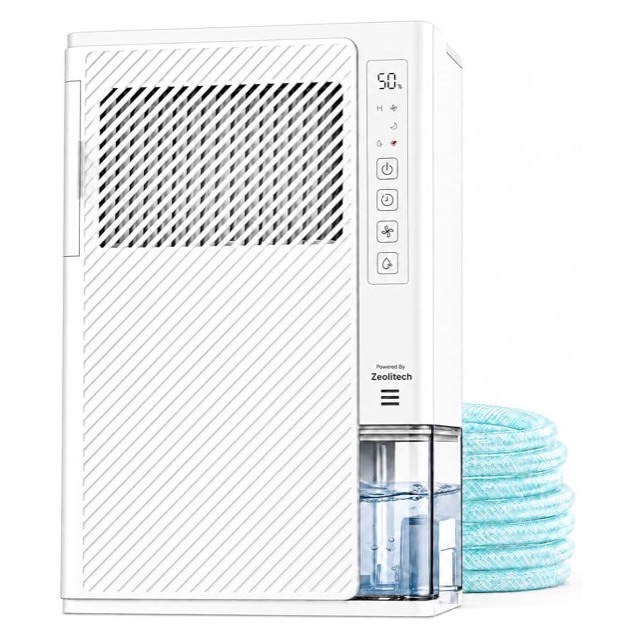
The two hOmeLabs units cover a standard bedroom and a large one. The GE and the HUMILABS bring the price down, the AEOCKY desiccant handles cold rooms, and the Eva-Dry mini is for the wardrobe rather than the room.
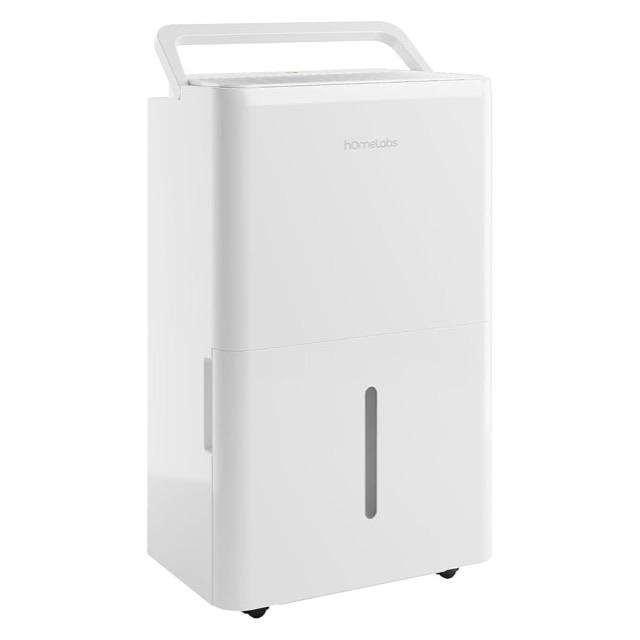
1. hOmeLabs 25-pint
Best for most bedrooms
Capacity
25 pints
Room
Standard bedroom
Control
Wi-Fi app
Rating
4.2 (280+)
The 25-pint hOmeLabs is the right size for a standard bedroom with one or two sleepers. It holds a 45% target on low, dims its display, and connects to an app so the humidistat can be adjusted from bed without getting up.
It takes a drain hose for overnight running and has a one-gallon tank with auto shut-off for nights without one. The washable filter slides out of the back.
Buyers describe it as quiet on low with a soft, steady fan sound. The main complaint is the tank filling quickly during the first damp nights, which the drain hose solves.
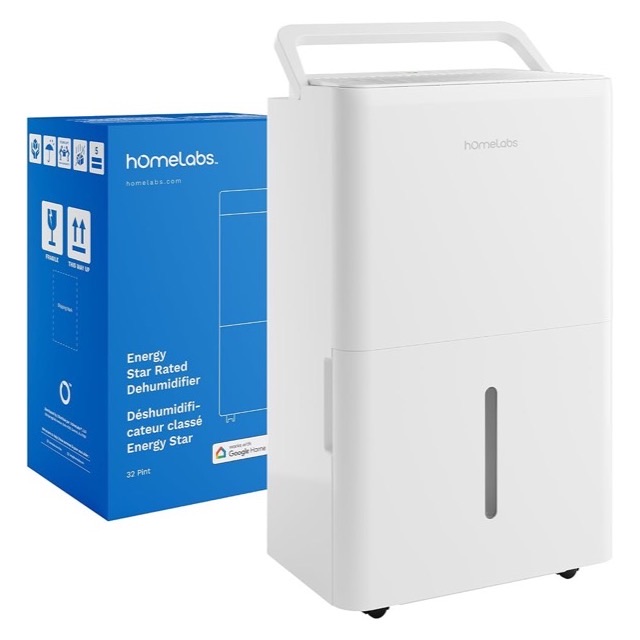
The 32-pint is the one for a master bedroom, a bedroom with an en-suite, or an upstairs landing with the bedroom doors open. It’s the same design as the 25-pint with more capacity, so it reaches its target faster and cycles less through the night.
It carries the same app control, drain outlet, one-gallon tank and washable filter. On low it holds a bedroom target quietly; on high it’s a utility-room sound, so the low setting is the bedroom setting.
It’s one of the most-reviewed dehumidifiers on Amazon, rated 4.6 stars from more than 11,000 buyers.
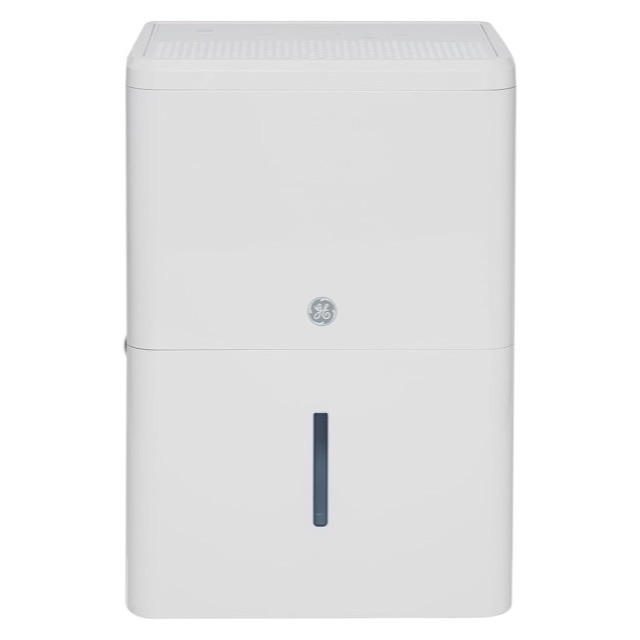
GE’s 25-pint unit adds one feature that suits a bedroom. Its Smart Dry mode drops the fan speed as the room approaches its target, so the last hour before the unit cycles off is its quietest. It has a drain-hose connection and a bucket with a handle.
The controls are simple, with no app, and the display dims. It’s a plain, well-built unit from a brand that handles returns easily.
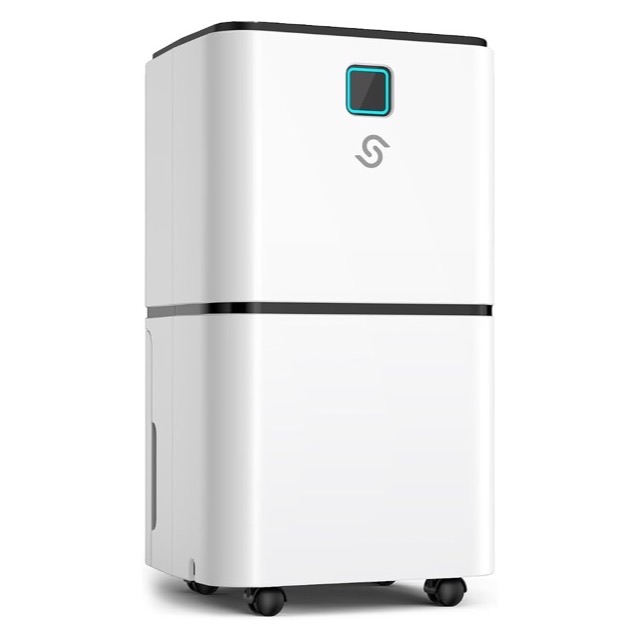
The HUMILABS is the budget bedroom unit with a proper sleep mode: all lights off, fan locked on low, humidistat holding the target. The manufacturer’s 36 dB figure is a sleep-mode number measured at a distance, so expect a quiet fridge rather than silence. That is still a sleepable level.
It has a drain hose outlet, a fast-dry mode for a wet day, and an auto mode for holding a set humidity. The tank is on the small side, so the hose is the overnight answer.
The AEOCKY is the pick for a bedroom that runs cold: an unheated room, a loft conversion in winter, a basement bedroom. A desiccant wheel keeps extracting below the temperature where compressors frost, and with no compressor there’s no start-up click through the night.
It has a humidistat, and its exhaust comes out warm, which takes the chill off a cold bedroom and makes it a poor choice for a hot one. It uses more power than a compressor unit of the same capacity.
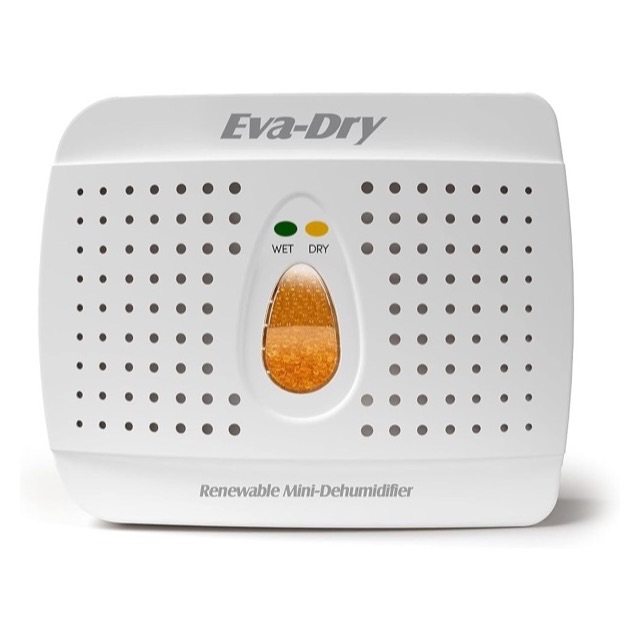
The Eva-Dry is here for the wardrobe, not the bedroom. It’s a sealed box of silica beads that absorbs a few ounces of moisture over several weeks, then plugs into a socket to dry out and go again. No noise, no power while in use, and nothing to spill.
Hung inside a wardrobe or placed in a drawer on a damp wall, it keeps clothes and shoes from going musty. In open bedroom air it does nothing measurable, so it’s the companion to one of the units above rather than a substitute.
The TempPro TP50 on the nightstand shows the humidity the room sits at. That number decides the setting and tells you whether the unit’s own sensor has drifted. Rated 4.6 stars from more than 150,000 buyers.
As an Amazon Associate we earn from qualifying purchases, at no extra cost to you.
Which dehumidifier for which bedroom
A standard bedroom, one or two sleepers. The hOmeLabs 25-pint or the GE 25-pint. Both hold 45% on low and take a drain hose.
A master bedroom or a room with an en-suite. The hOmeLabs 32-pint, which clears shower steam and still cycles gently overnight.
A light sleeper. The GE for its fan that slows as the room nears target, or the AEOCKY for a room cool enough to justify a desiccant. A rug under either and six feet of distance do the rest.
A cold bedroom. The AEOCKY desiccant, which extracts below 60°F and warms the air a little.
A hot, humid bedroom in summer. A compressor unit run in the evening before bed, with a fan overnight, so the room is dry without the added warmth.
A nursery. The GE or the hOmeLabs 25-pint on low with the display dimmed, placed well away from the crib, set to 45 to 50%.
A damp wardrobe or closet. The Eva-Dry, alongside a room unit if the room itself reads above 55%.
When the bedroom still feels damp
A dehumidifier holding 45% should take a bedroom from clammy to comfortable within a week. When the room still smells or the windows still stream, the moisture is coming from somewhere the unit can’t reach.
Condensation that returns every morning on one wall usually means that wall is cold rather than the room wet. A wardrobe or bed pulled a few inches off it lets air warm the surface. Mold that has already started behind furniture needs removing, and removing mold from walls is a separate job from drying the air.
A musty smell that outlasts a dry room points to growth somewhere hidden: under the carpet, inside a built-in wardrobe, or on the underside of the mattress. Mold on a mattress starts on the bottom, where the dehumidifier’s dry air never reaches. The mold detector can tell from a photo whether a mark behind the bed is growth or a stain.
The best dehumidifier for a bedroom fixes the air. When the symptoms stay after the air is fixed, the test is the next step.
The screening runs in your browser and takes about fifteen minutes from calibration to result.
Yes. Modern units shut off when the tank is full, and a humidistat set to 45 to 50% stops the room drying too far. Keeping the unit a few feet from the bed with the exhaust pointed away, and the filter clean, covers the rest.
What is the best dehumidifier for a bedroom?
For a standard bedroom, the hOmeLabs 25-pint. It has the right capacity for one room, a drain outlet for overnight running, a dimmable display and app control. The 32-pint version suits a master bedroom, and the AEOCKY desiccant suits a bedroom that runs cold.
How loud is a dehumidifier at night?
A quiet compressor unit on low measures around 45 to 50 decibels at 3 feet, close to a quiet fridge. The figures of 30 to 36 dB on the box are sleep-mode readings taken at a distance. A steady hum is sleepable; the compressor click and a rattling tank are what wake people.
What size dehumidifier do I need for a bedroom?
A 20 to 30 pint unit under the current standard suits a bedroom of 150 to 250 square feet with one or two sleepers. A master bedroom, an en-suite or indoor laundry drying moves it to 30 to 35 pints. The square-footage figures on the box describe open floors, not a closed room. Energy Star’s dehumidifier page explains the current pint rating.
Where should I put a dehumidifier in my bedroom?
Six feet or more from the bed, in open floor with a foot of clearance on each side. Point the exhaust away from the sleeper and stand it on a hard floor or a mat. Between the bed and the outside wall is usually the best spot, with the door closed.
What humidity should a bedroom be at night?
Between 40 and 50%. Above 60%, dust mites multiply and cold surfaces start to condense. Below 30%, the air dries airways. A humidistat set to 45 to 50% with a hygrometer on the nightstand keeps the room in the range the Sleep Foundation recommends.
Will a dehumidifier dry out my throat?
Only if it’s set too low or aimed at the bed. A target of 45 to 50% keeps the air comfortable. Placing the exhaust away from the sleeper stops a stream of dry air hitting the face all night.
Does a dehumidifier make a room hot?
A compressor unit warms the air it returns by a degree or two, and a desiccant by more. In winter that’s useful. In summer, running the unit in the evening and a fan overnight keeps the bedroom comfortable.
Do mini dehumidifiers work in a bedroom?
No. Thermoelectric and silica-bead minis remove a few ounces a day in warm air and almost nothing in a cool room. They keep a wardrobe or a drawer dry. A bedroom needs a compressor or desiccant unit rated at 20 pints or more.
Dehumidifier or air purifier for a bedroom?
They do different jobs. A dehumidifier removes water from the air, which stops dust mites, condensation and mold. An air purifier for mold removes spores and dust already in the air. A damp bedroom needs the dehumidifier first.