Mold on Mattress: How to Tell What It Is, Clean It, and Know When to Replace It
Quick answer
Light surface mold on a mattress that is otherwise dry and sound can be cleaned: vacuum it with a HEPA filter, dab the spots with rubbing alcohol diluted half and half with water or an EPA-registered fabric-safe spray, and dry the mattress fully in moving air. A mattress with mold growing into the foam, a musty smell that survives cleaning, or one that stayed wet for more than two days needs replacing.
Mold grows on the underside first, where sweat and breath condense against a solid base. Slats, a ventilated underlay and bedroom humidity under 50% keep it from coming back.
Published October 19, 202615 min readEvidence-based
A mattress spends eight hours a night under a warm body that gives off close to half a liter of moisture. Most of it escapes through the sheets, and some of it works down through the layers to the base, where a solid platform or the floor holds it.
You strip the bed or flip the mattress, and there it is. A scatter of black dots across the underside, white fuzz along one edge, or a pink tinge where the sheet was damp, and a faint smell of cellar.
You may already have scrubbed at it, put the sheets back on, and lain awake wondering what you’ve been breathing.
But is it mold, can a moldy mattress be cleaned, and how do you know when it has to go?
Note: Mold and mould are the same word, spelled two ways, and "fungus on a mattress" describes the same growth. This article uses the American spelling.
Mold on a mattress shows up as spots or patches that spread from one area. The underside, the edges and the site of an old spill are the usual places. The color tells you something, though not the species.
Black spotsMold if raised and spreading
The most common sight on the bottom of a mattress. Several species grow dark, including Cladosporium and Aspergillus, and the name black mold doesn’t identify any of them. Dots that spread outward in clusters and sit slightly raised on the fabric are mold. A flat dark patch with a tide line is more often an old water stain.
White or grey fuzzEarly growth or mildew
Early growth, or mildew, which is a flat, powdery surface form of the same organisms. Soft white mold on fabric is easy to mistake for dust, and a damp cloth settles it: dust wipes away clean, growth smears and comes back.
Pink or orangeUsually bacteria, not mold
Usually not mold at all. A pink film on a mattress, pad or sheet is normally the bacterium Serratia marcescens. It feeds on skin oils and soap residue and spreads in the same damp conditions as mold. It washes out of bedding in a hot wash and wipes off a mattress with alcohol.
Green or brownOften after a spill
Green points to Penicillium or Aspergillus, common on a mattress that was wet from a spill. Brown patches are sometimes mold and sometimes the foam itself breaking down.
Tiny dark specks, no spreadCheck for bed bugs first
Check for bed bugs before treating for mold. Bed bug droppings are small, ink-like dots that cluster along seams and piping, and they come with shed skins or live insects.
Growing mold releases a musty, earthy odor that gets stronger when you lift the mattress. A stain has no smell.
Why mold grows on a mattress, and why underneath
Mold needs moisture, something to feed on and still air. A mattress supplies all three every night, and the base decides whether the moisture gets out.
Solid base: moisture trapped
Body heat and sweat
Mattress
Plywood platform, drawer base or floor
Underside stays damp until morning
Slats or underlay: moisture escapes
Body heat and sweat
Mattress
Slats a few inches apart, or a mesh underlay
Underside dries each day
Body heat and sweat pass down through the mattress as water vapor. When that vapor reaches a cold, solid surface, it condenses. A plywood platform, a bunkie board, a storage drawer base or the floor all stay cooler than the mattress above them. The underside stays damp against them until morning.
Night after night, that damp patch never fully dries. Dust, skin flakes and the foam itself feed the growth, and the first dots appear on the bottom, out of sight.
A few things speed it up:
A mattress on the floor. The worst case, since the floor is cold and there’s no airflow at all. Carpet makes it worse by holding the moisture.
A bedroom above 60% humidity. Damp air slows drying everywhere in the room, and a bed against an outside wall gets condensation from the wall as well. A dehumidifier for the bedroom holding 45 to 50% overnight removes that cause.
Spills and accidents. Liquid that soaks into foam can take days to dry inside, long after the surface feels dry.
Memory foam. Dense polyurethane holds water longer than any other mattress material.
Plastic storage and moving. A mattress wrapped in plastic while still holding moisture, or stored in a basement or garage, grows mold inside the wrap.
Mold on the top surface is rarer and usually traces to a spill, a leak from above, or a sweaty sleeper under a non-breathable protector.
Can you clean a moldy mattress?
Sometimes. The answer runs through the material and how far the growth has gone.
Mold on the surface of a mattress that is otherwise dry, with no smell once you’ve aired it, cleans up well. That covers a scatter of spots on the underside caught early, mildew on the fabric cover, and pink bacterial film.
Mold in a mattress, as opposed to on it, doesn’t come out. The EPA’s guidance on cleanup says porous materials often can’t be cleaned once mold grows inside them, because the growth fills the spaces the cleaner can’t reach. Foam is about as porous as a material gets.
Clean it
A scatter of spots on the underside, caught early.
Mildew on the fabric cover.
Pink bacterial film.
A mattress that is otherwise dry, with no smell once aired.
Replace it
Growth on both faces, or across more than a patch the size of a dinner plate.
A musty smell that returns within a day or two of cleaning and airing.
A mattress that stayed wet for more than 48 hours after a leak, flood or accident, whether or not you can see growth.
Foam that has darkened, crumbled or stays damp inside when you press it.
Anyone in the household with asthma, allergies or mold sensitivity reacting to the room.
Material changes the odds. Natural latex and wool resist growth and dry faster, so a spotted natural latex mattress usually cleans up well. A spring mattress with a thin comfort layer sits in the middle. Memory foam is the hardest to save, because the moisture and the growth sit inside the block.
How likely a mattress is to hold mold, by material
Natural latex and wool · Resist growth and dry fasterLow
Spring with a thin comfort layer · Sits in the middleMedium
Memory foam · Moisture and growth sit inside the blockHigh
How to get rid of mold on a mattress, step by step
This method cleans surface mold without soaking the mattress. Water that gets into the foam turns a small patch into a bigger one.
1
Strip the bed and wash everything.
Sheets, protector and pad go through the hottest wash the labels allow. Pillows and duvets with spots follow the same approach as mold on clothes, and anything that stays musty after washing is replaced.
2
Move the mattress somewhere airy.
Outdoors in shade on a dry day, or a room with the windows open. Gloves and an N95 mask keep spores out of your lungs while you work.
3
Vacuum both faces with a HEPA filter.
Slowly, over every seam and the whole underside. A HEPA filter traps the spores a normal vacuum blows back out. Empty the canister outside.
4
Treat the spots.
Dampen a cloth with 70% isopropyl alcohol diluted half and half with water, or with an EPA-registered mold spray that permits fabric. Dab from the edge of each patch inward. Keep the mattress damp, not wet. Hydrogen peroxide at 3% works on light fabric but can bleach dark covers, so it needs a test spot. Bleach is for hard surfaces, not mattresses.
5
Let it sit, then blot.
Ten to fifteen minutes gives the alcohol or spray time to work. A dry cloth then lifts the moisture and loosened growth.
6
Dry it completely.
Stand the mattress on its side with a fan blowing across each face, or in sunlight for a few hours if the cover tolerates it. Memory foam takes a full day or more. A mattress that goes back on the bed damp regrows within the week.
7
Vacuum again, then deodorize.
A second HEPA pass once dry collects what the cleaning loosened. Baking soda left on the surface for a few hours and vacuumed off absorbs leftover smell.
8
Fix what caused it before the mattress goes back.
Mattress mold removal only holds if the base, the room and the protector change too, all covered below.
Vinegar also kills surface mold, left on for an hour, and suits anyone who prefers to avoid alcohol. It adds more moisture than alcohol, so the drying step takes longer.
Memory foam, Tempur, Purple and other foam mattresses
Foam mattresses attract the most searches for mattress mold because foam is where it grows best.
Polyurethane foam, including memory foam, is a dense sponge. Moisture that gets in has no path out except the way it came. The bottom of a bed-in-a-box on a platform base is the dampest spot in the room. Tempur-Pedic and similar high-density foams hold moisture longest; Purple’s polymer grid breathes better, but the foam layers under it behave like any other foam.
Surface spots on the cover of a foam mattress clean up with the method above. Growth that has reached the foam itself, which shows as dark patches that stay damp or spread after cleaning, means the mattress is done. Unzipping or cutting a small window in the cover shows the foam itself. Discolored, crumbling or wet foam inside doesn’t recover.
Sleep Number beds and mold
Sleep Number beds, made by Select Comfort, use inflatable air chambers under foam layers, and the chambers run cooler than the foam and the body on top.
That temperature difference makes condensation inside the bed, on and around the chambers, and owners have reported mold on the foam and the chamber surfaces since the 2000s. A class action filed in 2008 alleged a design defect that let moisture collect inside the bed. The company said mold in its beds was no more common than in other upholstered furniture, and it later changed foam materials.
These beds unzip, so checking takes minutes. Lifting the comfort layers and inspecting the chambers and the foam around them every few months catches growth early. Spots on the chambers wipe off with alcohol; foam layers with growth inside are replaceable parts, and the base needs airflow like any other.
Air mattresses, futons and camping mats
Inflatable mattresses mold for a different reason: they’re stored damp. Breath and sweat condense on the cold vinyl overnight, and a bed deflated and folded that morning keeps the moisture inside the folds.
Alcohol or diluted vinegar on a cloth wipes mold off vinyl, and the mattress needs to dry fully inflated before it’s rolled up. Bleach cracks the vinyl. Storing it loosely in a dry cupboard rather than a basement or garage stops it coming back.
Futons and thin camping mats on the floor grow mold on the underside for the same reason a mattress on the floor does. Standing a futon on its side every morning, as it’s designed to be, keeps the underside dry.
Mold on bed frames and slats
Growth often shows on the bed frame before the mattress, because wood and the back of a headboard sit directly against the damp.
White or grey fuzz on wooden slats, a headboard against an outside wall or the inside of a storage drawer is mold if it’s raised and smells musty. Chalky, dry white marks on varnished wood with no smell are usually the finish breaking down or mineral deposits, not growth.
Wiping the wood with diluted vinegar or alcohol, drying it well and leaving the frame open to the air for a day clears light growth. Unfinished pine slats that have gone black or soft need replacing, since the mold has gone into the grain.
Pulling the bed a few inches from an outside wall stops the headboard condensation that starts most frame mold.
Is it safe to sleep on a mattress with mold?
Sleeping on a moldy mattress keeps your face a few inches from the source for hours. A small patch there counts for more than the same patch on a basement wall.
Mold releases spores and fragments that are common allergens. Sneezing, a blocked nose, itchy eyes and a cough that are worse in the morning and ease during the day point at the bed. People with asthma, allergies or a weakened immune system react at lower exposure.
Cleaning a light patch and drying the mattress usually settles those symptoms within days. Symptoms that carry on after the mattress is clean or replaced, or that lift on holiday and return at home, point past the bed to the room. A musty smell in the house that follows you from room to room points the same way.
The screening runs in your browser and takes about fifteen minutes from calibration to result.
Every case of mattress mold comes back to moisture with nowhere to go. The five tools below give it somewhere to go, and most cost less than a set of sheets.
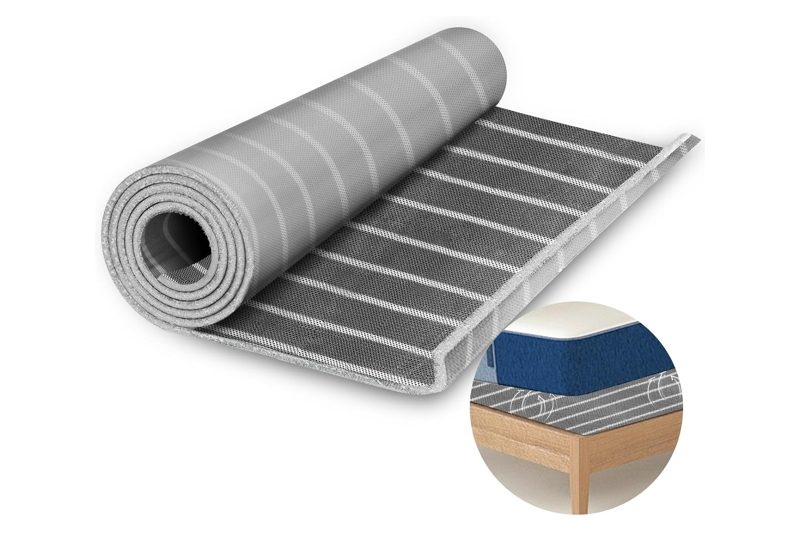
Breathable mattress underlay
Size
80 × 80 in, cut to fit
Fixes
Platform or floor
Rating
4.4 (220+)
A ventilated underlay is a thin mesh sheet that sits between the mattress and a solid platform, bunkie board or floor. Air moves through it, so the underside of the mattress dries each day instead of sitting in condensation. This one is 80 by 80 inches and cuts to size with scissors for any bed.
It’s the fix for the two situations that cause most mattress mold: a foam mattress on a platform bed, and any mattress on the floor. Rated 4.4 stars from more than 220 buyers.
Mold grows readily above 60% relative humidity and struggles below 50%, and a bedroom’s humidity is impossible to judge by feel. The TP50 shows it on a large display with a dry, comfortable or wet indicator, accurate to within a few percent.
Left on the bedside table, it tells you whether the room needs a dehumidifier or just an open window. Rated 4.6 stars from more than 150,000 buyers.
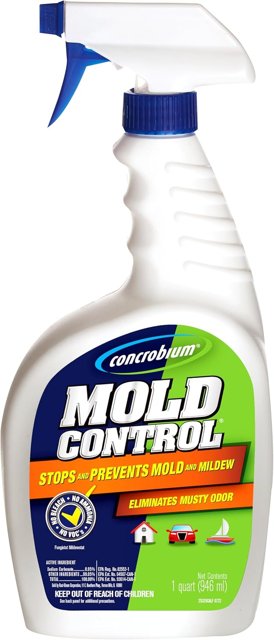
Concrobium is an EPA-registered mold spray whose label permits fabric and upholstery, and it contains no bleach, ammonia or odor. It dries to a thin film that keeps working after the surface is dry, which suits a mattress underside and a wooden bed frame.
It’s left to dry rather than wiped, so it adds little moisture. The same spray appears in the black mold removal spray comparison for hard surfaces. Rated 4.0 stars from more than 2,600 buyers.
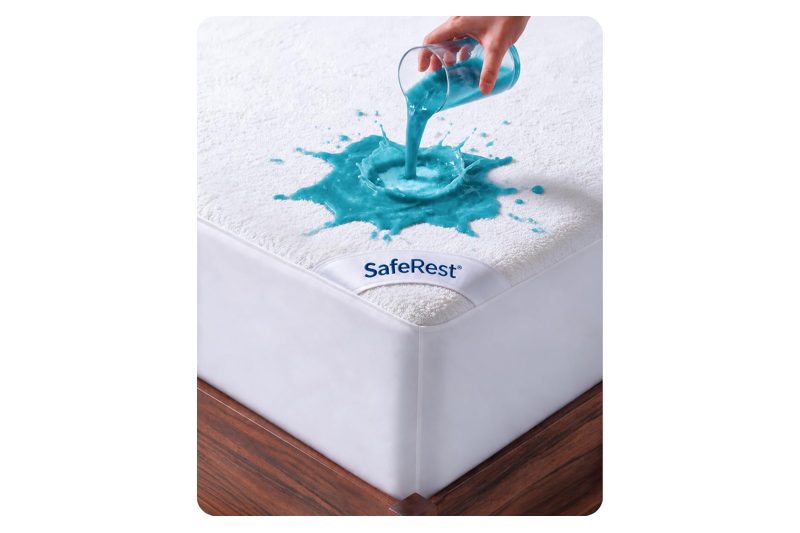
A waterproof protector keeps sweat, spills and accidents on the surface, where they dry, instead of in the foam. SafeRest’s cotton terry top over a thin polyurethane membrane is breathable and silent, and it goes in the washing machine.
It’s the most-reviewed protector on Amazon, at 4.6 stars from more than 280,000 buyers. For an organic cotton version, the Naturepedic protector in the non-toxic mattress guide does the same job.
A vacuum without a sealed HEPA filter pulls spores off the mattress and blows them out the back. The Navigator’s sealed system and HEPA filter trap them, and the lift-away canister with the upholstery tool reaches the whole mattress and the slats underneath.
As an Amazon Associate we earn from qualifying purchases, at no extra cost to you.
Beyond the tools, three habits do most of the work.
Every morning
Pulling the duvet back for an hour each morning lets the night’s moisture out of the top.
Every couple of months
Standing the mattress on its side for an afternoon every couple of months airs the underside.
Always
Keeping the bed a few inches from an outside wall stops the condensation that starts frame and headboard mold.
Frequently asked questions
Can you get mold out of a mattress?
Surface mold on a dry, sound mattress comes off with a HEPA vacuum and a cloth dampened with diluted rubbing alcohol or a fabric-safe mold spray. A full day of drying finishes it. Mold that has grown into the foam doesn’t come out, and the mattress needs replacing.
What does mold on a mattress look like?
Clusters of black, grey, green or white spots that spread from one area, usually on the underside, with a musty smell. Pink patches are normally bacteria rather than mold. A flat brown ring with no smell is a water stain.
Why is there mold under my mattress?
Body moisture passes down through the mattress and condenses against a cold, solid base such as a platform, bunkie board or the floor. The underside stays damp night after night with no airflow to dry it. Slats or a ventilated underlay fix it.
Is it safe to sleep on a moldy mattress?
It’s best not to. Spores and fragments a few inches from your face for eight hours can set off sneezing, congestion, coughing and asthma, especially in children and anyone sensitive. Clean a light patch before sleeping on it again, and replace a mattress with growth inside.
Can memory foam get mold?
Yes, and more easily than other materials. Dense polyurethane holds moisture, and a memory foam mattress on a platform base or the floor grows mold on its underside. Growth that reaches the foam usually means replacing the mattress.
Does a mattress protector prevent mold?
A waterproof protector stops sweat and spills getting into the mattress from above, which prevents the top-surface kind. Mold on the underside comes from condensation against the base, so the protector needs pairing with slats or an underlay.
What kills mold on a mattress?
Isopropyl alcohol at 70%, diluted half and half, kills surface mold and dries fast. An EPA-registered spray that permits fabric, such as Concrobium, does the same and leaves a protective film. Vinegar works but adds moisture, and bleach damages fabric and foam.
Should I throw away a moldy mattress?
Yes if the growth has reached the foam, covers more than a small patch, returns after cleaning, or the mattress stayed wet for more than two days. Light surface spots on an otherwise dry mattress can be cleaned.
Why does my Sleep Number bed have mold?
The air chambers inside the bed run cooler than the foam above them, so moisture condenses on and around them. Unzipping the cover and checking the chambers and foam every few months catches it early, and growth on the foam layers means replacing those parts.
How do I get mold off a mattress pad or protector?
Wash it on the hottest cycle the label allows with an oxygen bleach additive, then dry it fully in the sun or a dryer. A pad that still smells musty afterwards is cheaper to replace than to keep treating.