Top 9 Dehumidifier for Mold: We Tested the Best
A dehumidifier for mold works on one principle. Mold cannot grow without moisture, and in a house that moisture is usually the air itself rather than a leak. Hold indoor relative humidity between 30 and 50 percent, which is the range the EPA recommends, and most household species cannot establish on walls, ceilings, carpet or furniture. Let it sit above 60 percent for a few weeks, and colonies appear with no water damage at all. A dehumidifier is the tool that moves a room from the second condition to the first and keeps it there.
However, a dehumidifier does not kill mold that is already growing, and that limit sits underneath every recommendation on this page. If you can see growth, you remove it first and run the dehumidifier so it does not come back. If you cannot see growth but the room smells musty or reads above 60 percent on a hygrometer, the dehumidifier is the right first purchase. We tested nine units against the conditions mold actually needs, and the list below tells you which one fits your room, your basement, or your crawl space, and which one to leave on the shelf.
Note: Mold and mould are the same thing, spelled differently on either side of the Atlantic, so a dehumidifier for mould and a dehumidifier for mold are the same purchase. This article uses the American spelling throughout.
Will a dehumidifier help with mold?
Yes, and the reason also marks where the help stops. Mold spores are present in every home, indoors and out, and they stay inert until the surface they land on holds enough moisture for them to germinate. That moisture comes from the air far more often than from a leak. Warm, humid air deposits water onto any surface cooler than its dew point, and a surface that stays damp for 24 to 48 hours is enough for a colony to start. A dehumidifier pulls water vapour out of the air, which lowers the dew point, which stops surfaces getting wet, which removes the condition growth depends on.
Below 50 percent, growth on ordinary building materials is rare. Between 50 and 60 percent, it is possible but slow, and cold spots such as exterior wall corners can still cross the line. Above 60 percent, sustained, most household species establish within weeks, and above 70 percent some species grow with no liquid water anywhere. Set the humidistat to 45 percent and you sit inside the safe range with a margin for the cold corners.
What a dehumidifier will not do is get rid of mold you already have. Drying the air sends an existing colony dormant, and a dormant colony still sheds spores and fragments that carry allergens, still smells, and revives the moment humidity climbs. Visible growth has to be cleaned or the material replaced, and our guides to removing mold from walls and black mold remediation cover that side of the job. The dehumidifier's role is to make sure the work holds.
How we tested these dehumidifiers for mold
We ran each unit in the conditions a damp home actually produces rather than in a lab at 80°F. Each machine was placed in a room held at 70 percent relative humidity and we timed how long it took to bring the room below 50 percent, then left it on its humidistat for 72 hours and logged whether it held 45 percent without cycling itself into short bursts. We ran the compressor units again at 55°F to see which ones frosted and which kept extracting, because a basement in spring is not a living room in August.
Alongside extraction, we measured noise on the lowest setting that still held the target, checked the bucket capacity against a real day of running, tested the continuous drain and, where fitted, the pump, and weighed each unit's plug-in power against its Energy Star rating. Where a manufacturer's figure could be checked against a published Energy Star test, we used the verified number rather than the box. Every unit was also checked against the CPSC recall database, because millions of dehumidifiers have been recalled for fire risk in the last five years and some of those brand names are still on sale.
Choosing a dehumidifier for mold: what matters
Dehumidifiers are rated in pints of water removed per day. Until 2019, that figure was measured at 80°F and 60 percent humidity. The US Department of Energy then moved the test to 65°F at the same humidity, and cooler air holds less water, so every machine collects fewer pints in the test without changing at all. A unit sold as 70 pints in 2018 is sold as 50 pints today, and it is the same machine. Most sizing charts online still use the old numbers, which is why they tell you to buy something bigger than anything on the shelf. For mold, dampness matters more than floor area, so size from how the space feels and smells, then buy one step up if you are between sizes.
The humidistat is what lets a dehumidifier hold 45 percent instead of drying the air to 30 percent and wasting electricity. Every unit below has one. Built-in sensors drift, so a separate digital hygrometer costing a few dollars, placed away from the unit, tells you the number the room actually lives at.
A 50-pint unit fills a two-gallon bucket in roughly eight hours in a wet space, which means a bucket-only unit stops working while you sleep. Every unit here takes a continuous drain hose. Gravity drainage needs a floor drain or a sump lower than the outlet. A built-in condensate pump lifts water into a sink or out through a wall, and it is the feature that decides whether a basement unit runs unattended for weeks or gets switched off in frustration.
Compressor dehumidifiers extract less as the temperature drops and start frosting their coils around 60 to 65°F. Some manage this with an auto-defrost cycle, some with high airflow across the coil, and some do not manage it at all and simply stop. A basement or crawl space that sits at 55°F for half the year needs a unit rated to operate at 41°F or below, or a low grain refrigerant unit built for that environment.
A dehumidifier in a bedroom runs on its low setting all night, so the low-setting noise is the one that matters. Give any unit clear space on all sides, since it pulls air in and pushes air out and a corner starves both.
A 50-pint compressor unit draws 500 to 700 watts. Running around the clock while it pulls a damp space down, that is 12 to 17 kilowatt hours a day. Once it holds the target and cycles, the figure drops sharply. Energy Star models use about 14 percent less electricity than uncertified ones for the same water removed, and the Energy Star Most Efficient list marks the top few percent.
Ionizers, UV lamps and antimicrobial filters inside a dehumidifier add price without adding dryness. A dehumidifier controls mold by controlling water, and the compressor, coil and humidistat are the entire mechanism. Coverage claims in square feet are marketing figures measured in mild conditions; use the pint rating and the dampness of your space instead.
In August 2021 the CPSC recalled about two million dehumidifiers made by New Widetech and sold under Frigidaire, Danby, De'Longhi, Kenmore, Gree, SoleusAir and other names, after 107 reports of overheating and fire. A further recall in 2023 covered more than 1.5 million units made by Gree and sold as GE, Kenmore and others, after 23 fires. Current models from these brands are not affected, but if you are buying second-hand or running an older unit, check the model and serial number on the CPSC recall page before you plug it in.
Our dehumidifier size calculator works in current-standard pints, shows the old equivalent alongside, and sizes from dampness level rather than floor area alone.
The 9 best dehumidifiers for mold
There are dozens of dehumidifiers on the market, and most of them claim to prevent mold in some form. We chose these nine for mold specifically, which meant weighting cold-room performance, drainage, and the ability to hold 45 percent unattended over raw extraction speed. We also found that not every unit sold for mold can do the job, and the last entry on this list is there to say so plainly. Here are the nine, from the one most people should buy to the special cases, with prices given as bands because they move. Links go to Amazon listings.
1. Frigidaire FFAD5033W1 50-pint
Around $250 to $320

The Frigidaire FFAD5033W1 is the dehumidifier for mold most homes should start with. It is rated at 50 pints per day under the current standard, which is the machine that used to be sold as 70 pints, and it is specified to operate from 41°F to 89°F, which covers a cool basement as well as a warm bedroom. It moves an unusually high volume of air across its coil, which is how it keeps extracting at low temperatures without a separate defrost cycle.
The bucket holds 16.9 pints, larger than most competitors, and the humidistat sets anywhere from 35 to 85 percent, so holding 45 percent is a single button press. It has a continuous drain port but no pump, so gravity drainage needs a floor drain or a sump below the outlet. It is Energy Star certified.
Frigidaire is a name that appears in the 2021 recall, which covered older units built by a different manufacturer, so if you inherit or buy one second-hand, check the serial number. A new FFAD5033W1 is not affected.
Check price on Amazon2. Midea Cube 50-pint with pump
Around $280 to $330

The Midea Cube is the unit we recommend for a large, wet basement where nobody wants to think about the bucket. It is rated at 50 pints under the 2019 standard, carries a built-in pump with a 16-foot drain tube, and its collapsible design holds about three times the water of a standard tank when extended, so it runs for days between emptying even without the hose connected.
It is on the Energy Star Most Efficient list, controls from an app or by voice, sets from 35 to 85 percent, and pulls a room down quickly in testing. The pump has drawn complaints in reviews, and most of them trace to the hose not being seated or pump mode not being switched on, which the manual covers on one page. It is the strongest all-round basement unit under $400.
Check price on Amazon3. Waykar 80-pint
Around $200 to $250
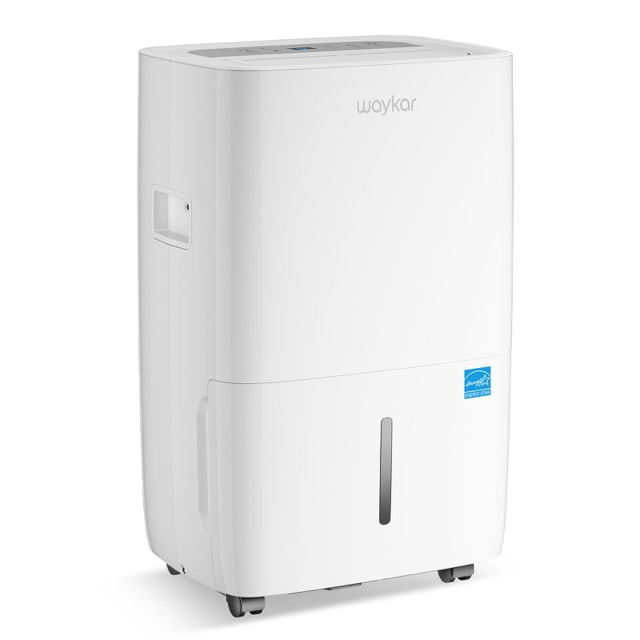
The Waykar 80-pint is the value pick, and it is the unit you will see most often near the top of the dehumidifier bestseller list. The 80-pint figure is measured at 95°F and 90 percent humidity, which is far warmer and wetter than the federal test, so under the 2019 standard it belongs in the 50-pint class alongside the Frigidaire and the Midea. It is Energy Star certified, claims coverage up to 5,000 square feet, and its humidistat goes down to 30 percent where many budget units stop at 40.
It has auto defrost, a continuous drain hose, a swinging louvre that spreads dry air across a wide room, and it runs at around 42 decibels on low. There is no pump, and the tank is small for the extraction rate, so plan on the hose. The long-term reliability record is shorter than Frigidaire has, which is the trade for the price.
Check price on Amazon4. Honeywell TPFIT50PWK 50-pint with pump
Around $280 to $340
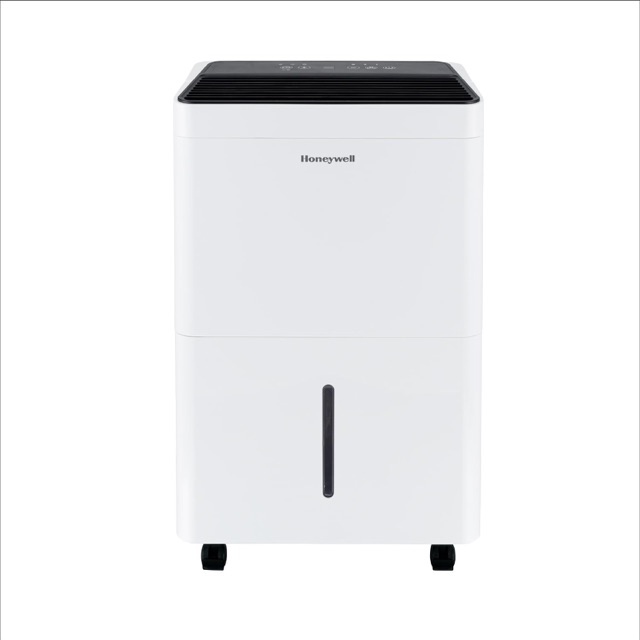
The Honeywell TPFIT50PWK is the unit for a basement with no floor drain, because its built-in pump lifts condensate 15 feet vertically or horizontally into a sink or out through a window. It is rated at 50 pints under the current standard, sits on the Energy Star Most Efficient list, and claims coverage up to 4,000 square feet.
It adds a laundry mode that runs the fan hard for drying clothes indoors, which is a genuine mold use since a load releases about five pints of water into the room, and an auto-comfort mode that eases off as the room cools. Choose it over the Frigidaire when the drain has to go uphill.
Check price on Amazon5. Honeywell TP50AWKNR 32-pint with Wi-Fi
Around $220 to $280
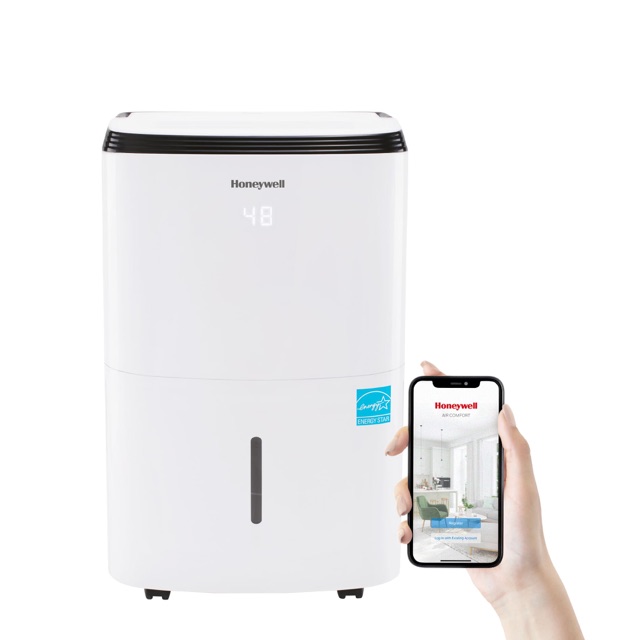
The Honeywell TP50AWKNR is the quiet choice for a finished basement or a large bedroom that doubles as living space. It is rated at 32 pints under the current standard, which is the machine that used to be sold as 50 pints, it covers rooms up to about 3,000 square feet by the manufacturer’s figure, and it was named Energy Star Most Efficient in 2023.
It controls from an app or by voice, ships with a continuous drain tube, and has anti-spill guards on the tank. There is no pump. Where it earns its place is holding 45 percent on its low setting at a noise level that does not stop a conversation or wake a sleeper.
Check price on Amazon6. Waykar 34-pint
Around $150 to $190
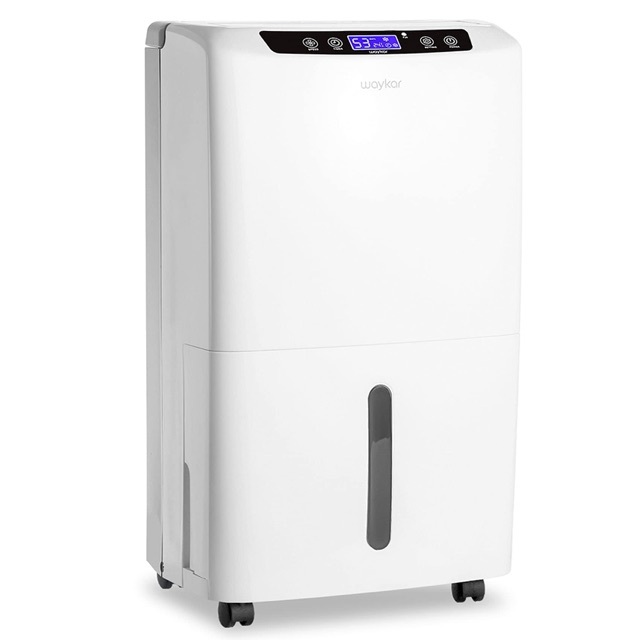
The Waykar 34-pint is the bedroom unit at a budget price. A standard bedroom or a home office does not need 50 pints of extraction, and this unit, which measures its 34 pints under the same warm-and-wet test as its larger sibling and extracts considerably less under the federal one, holds a medium room at 45 percent while drawing less power than the larger units.
It is Energy Star certified, has auto defrost, a humidistat that goes to 30 percent, a drain hose in the box, and a 0.66 gallon tank that needs emptying daily without the hose. Choose it for a bedroom on a damp exterior wall or a converted garage under about 800 square feet, and choose the Honeywell above if quiet matters more than price.
Check price on Amazon7. AlorAir Sentinel HD55
Around $700 to $900
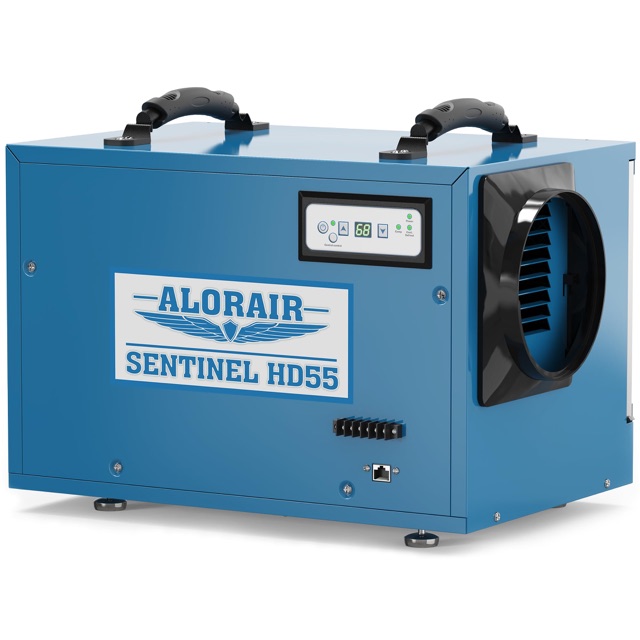
The AlorAir Sentinel HD55 is a crawl space and basement unit, and it is built differently from everything above it. It is sold as a 113-pint unit, which is its saturation figure; under the AHAM test it removes 55 pints per day, and it holds a space up to about 1,200 square feet. It is designed to run in cold, low-airflow spaces where a portable unit would frost and stop.
It has an auto-defrost system that senses coil temperature and cycles the compressor while the fan runs, a ductable outlet so it can be installed once and serve an enclosed area, a permanent drain hose, and a six-year limited warranty. It has no bucket, which is the point. It is the unit for a crawl space or an unfinished basement that has grown mold more than once.
Check price on Amazon8. Santa Fe Compact70
Around $1,500 to $1,900
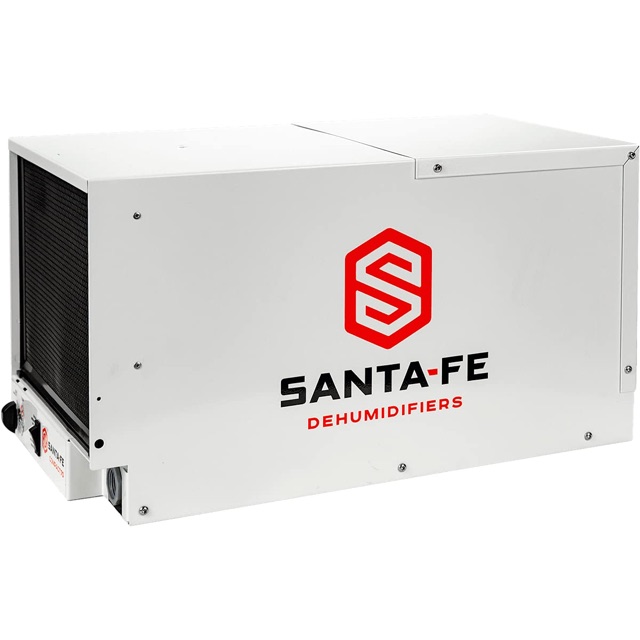
The Santa Fe Compact70 is the unit for a serious, recurring mold problem in a basement or crawl space, and it is the one professional remediators install. Energy Star verified it at 43.7 pints per day in the cold 65°F test, which is a higher real-world figure than most units sold as 50 pints, at an efficiency of 4.1 pints per kilowatt hour that earned it a place on the Energy Star Most Efficient list. It covers up to about 2,200 square feet.
It is a 55-pound horizontal box, 12 inches wide and 21 inches deep, built to sit in a crawl space and drain to a hose for years without attention. The price is roughly the cost of one remediation visit. If your basement has been remediated before and the mold came back, this is the unit that stops the cycle.
Check price on Amazon9. Pro Breeze Electric Mini
Around $40 to $60
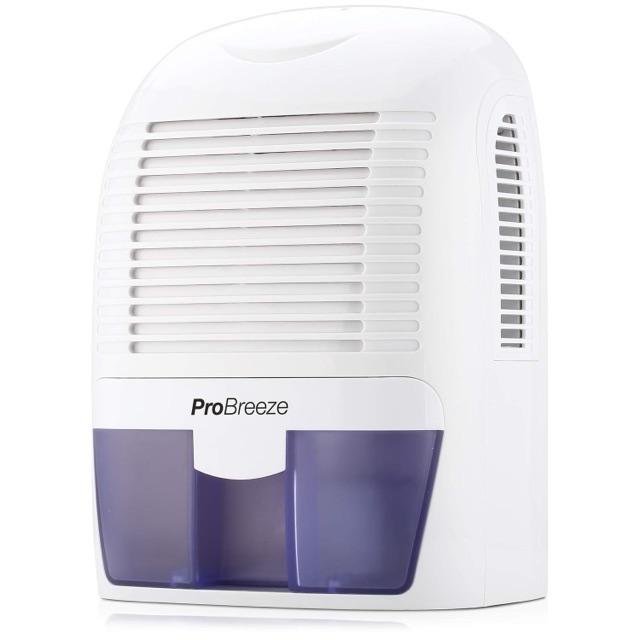
The Pro Breeze Electric Mini is on this list so that you do not buy it for mold. It is a thermoelectric unit with no compressor, it removes up to about 18 ounces of water a day in warm, humid air and far less in a cool room, and it is sold for spaces up to 250 square feet that it cannot dry.
It has one real use. A closet, a small bathroom cabinet, or a wardrobe against a damp wall holds a few cubic metres of air, and a mini unit running continuously keeps that small volume below the growth line. For any room you can stand up in, buy the Waykar 34-pint or the Honeywell 32-pint instead.
Check price on AmazonDehumidifier for basement mold
Basements combine the three conditions that make a dehumidifier for basement mold a different purchase from a bedroom unit. Ground moisture rises through the slab and walls continuously, the air runs 10 to 15 degrees cooler than the rooms above, and air exchange with the rest of the house is poor. A basement should be treated as one dampness level worse than it looks, and sized accordingly.
Sizing a basement
A typical 800 to 1,200 square foot basement that feels damp and smells musty needs 20 to 30 pints per day under the current standard, and a wet basement with sweating walls needs 35 to 50. Rather than working from a chart, put the dimensions and the dampness level into the dehumidifier size calculator and it will give you the capacity, the tank-fill time, and the expected running cost. Every 50-pint unit on this list covers the common case; the AlorAir and Santa Fe cover the wet one.
A basement that sits below 60°F for much of the year defeats most portable dehumidifiers. The coil frosts, the unit stops extracting, and the humidity climbs back while the machine appears to be running. The Frigidaire FFAD5033W1 is specified to 41°F and manages by airflow, the AlorAir and Santa Fe manage by auto defrost, the two Waykars carry auto defrost as well, and everything else on the list should be treated as a warm-season unit in a cold basement.
Crawl spaces
A crawl space is a basement with no headroom and bare earth, and bare earth releases water into the air continuously. The lasting fix is a ground vapour barrier with a dedicated crawl space unit ducted or placed to serve the whole area, which is what the AlorAir Sentinel and the Santa Fe Compact70 are built for. A portable unit in a crawl space fills its bucket in a day and then does nothing.
Slab floors and carpet
Carpet laid directly on a basement slab grows mold from beneath, invisibly, because the concrete wicks moisture upward into the backing and underlay. A dehumidifier holds the room air in range but cannot dry a carpet from below. If the basement smells musty every summer while looking clean, lift a corner of the carpet before buying anything, and our guide to mold in carpet covers what you will find.
Dehumidifier for mold prevention in bedrooms, bathrooms and closets
A bedroom collects a pint of moisture per sleeper per night, which is why bedroom windows stream on winter mornings and why growth appears behind wardrobes on exterior walls. A 32-pint unit on its low setting holds a bedroom at 45 percent and does so quietly enough to sleep beside. Put it with clear space around it rather than in the corner, and leave a finger-width gap behind furniture on outside walls so the room air keeps those surfaces warm. Our dew point calculator shows the humidity a cold exterior wall can tolerate before it starts collecting water.
Bathrooms produce moisture in bursts, and the right tool for a burst is an extractor fan run through the shower and for 20 minutes after. A dehumidifier earns its place in a bathroom only where laundry dries indoors, which releases about five pints per load into whichever room it hangs in. Where growth keeps returning overhead despite the fan, the guide to mold on a bathroom ceiling explains whether condensation or a leak is putting it there.
Closets and wardrobes on damp walls are the one place a mini dehumidifier belongs. The volume is small enough for a thermoelectric unit to hold below the growth line, and the alternative is leather and fabric that smells musty by spring.
Musty smell, black mold and mold allergies
A musty smell in a room that reads above 60 percent is almost always active growth, and a dehumidifier will reduce the smell by sending the colony dormant. It will not remove the smell entirely, because the gases that make it are already in fabrics and porous materials, and because dormant growth restarts the moment the unit is switched off. If the smell survives two weeks of the room holding 45 percent, the source is somewhere the dry air is not reaching, and our guide to tracking a musty smell to its source gives the search order.
If you are searching for a dehumidifier for black mold, the answer is the same unit as for any other species. Stachybotrys, the species behind the reputation, needs material to stay near saturation for a week or more, which condensation alone rarely delivers. Where it appears, there is usually a leak, and a dehumidifier does not fix a leak. Our guide to how dangerous black mold exposure actually is covers where the real risk sits.
A dehumidifier for mold allergies does two jobs at once. Holding a bedroom under 50 percent removes the condition mold needs, and it also collapses the dust mite population, which cannot survive sustained humidity below that level and which is the other half of most mold allergy symptoms. Pair the dehumidifier with an air purifier for the spores already in the air, and our air purifier for mold guide explains which units carry enough filtration to matter.
Keeping the dehumidifier itself mold-free
A dehumidifier collects water in a dark tank and passes every cubic foot of room air across a wet coil, which makes the machine itself the dampest object in the room. Left alone, the tank grows a film within a fortnight and the unit begins distributing what it was bought to remove. Empty the bucket daily where you are not using a hose, wash it weekly with a mild detergent or a vinegar rinse, clean the filter monthly, and wipe the coil with a soft brush when the filter comes out. A unit on a continuous drain still needs its drain pan and hose checked, since a kinked hose backs water up into the machine.
When a dehumidifier is the wrong tool
A dehumidifier is the right purchase for a damp space with no visible mold, and the right companion for a space where the mold has been removed. It is the wrong purchase as a substitute for either. However, three situations call for something else first.
If there is visible growth, removal comes first, and the dehumidifier runs during and after it. If the space is wet because of a leak, a rising water table, or a failed sump, a dehumidifier loses to the water every time, and the leak is the job. If the source is inside the HVAC system, a room unit is fighting a distribution network, and the guide to mold in air vents covers why the coil and ducts need attention before the room does.
If you are buying because of how you or someone in the house has been feeling, the humidity question and the health question are separate. The symptoms associated with mold toxicity are worth reviewing, and the free visual contrast sensitivity test measures a neurological marker of biotoxin exposure in about fifteen minutes, which tells you whether the exposure has been affecting you rather than only the air. A dehumidifier for mold protects the building. The test tells you whether the building has already reached you.
Frequently asked questions
Will a dehumidifier kill mold?
No. Drying the air sends an existing colony dormant, and a dormant colony still sheds allergenic spores and fragments and revives when humidity returns. A dehumidifier prevents new growth by holding relative humidity between 30 and 50 percent. Visible mold has to be cleaned or the material replaced.
Will a dehumidifier get rid of mold?
It gets rid of the condition mold needs, not the mold. Run alongside removal, it stops growth returning. Run alone in a room with visible growth, it slows the colony without removing it, and the smell and the spores remain.
What humidity should I set a dehumidifier to for mold?
Set it to 45 percent. Below 50 percent growth is rare on building materials, and the extra margin covers cold corners that sit a few degrees below room temperature. Going below 35 percent dries skin, eyes and wood for no additional benefit.
What size dehumidifier do I need for a basement with mold?
A damp 800 to 1,200 square foot basement needs 20 to 30 pints per day under the current standard, and a wet one with sweating walls needs 35 to 50. Basements read one dampness level worse than they look, so size up. The dehumidifier size calculator on this site gives the figure from dimensions and dampness.
Does a dehumidifier help with mold allergies?
Yes, twice over. Holding a bedroom under 50 percent removes the condition mold needs and collapses the dust mite population, which cannot survive at that humidity. It does not remove spores already in the air, which is an air purifier’s job.
Why does the same dehumidifier show two different pint ratings?
The US test standard changed in 2019 from 80°F to 65°F at 60 percent humidity. Cooler air holds less water, so every machine collects fewer pints in the test. A unit rated 50 pints today is the machine sold as 70 pints before, and retailers still mix the two figures. Some brands also quote a figure measured at 95°F and 90 percent humidity, which is higher again.
Can a dehumidifier itself grow mold?
Yes, and it is one of the commonest ways a dehumidifier makes a room worse. The tank holds standing water in the dark and the coil stays wet. Empty the bucket daily, wash it weekly, clean the filter monthly, and check the drain hose for kinks.
Some of the links in this article are Amazon affiliate links. That means we may earn a small commission if you use them to purchase a product. It costs you nothing extra, it does not change the content, and it supports our research and development. As an Amazon Associate, we earn from qualifying purchases.
Test Yourself Against Mold Toxicity
The Visual Contrast Sensitivity test measures a neurological effect of biotoxin exposure that most people cannot notice on their own. Free, online, and under 15 minutes.