Mold in Carpet: Ultimate Guide to Identify, Remove and Prevent Molds
Mold in carpet behaves differently from mold on any hard surface in your home, because carpet is three layers of food and shelter stacked on top of each other. The pile traps spores and dust, the woven backing gives growth something organic to root into, and the underlay beneath soaks up water and releases it slower than every layer above. Whether yours can be cleaned or needs to come out depends on which of those layers the fungus has reached and how long the carpet stayed wet, and both of those questions can be answered in a few minutes without any equipment.
Note: Mold and mould are the same thing, spelled differently on either side of the Atlantic, so mould in a carpet and mold in a carpet describe the same problem. This article uses the American spelling throughout.
How mold gets into carpet
Carpet collects everything a fungus needs before any water arrives. Spores are always present in indoor air and settle into the pile continuously, dust and skin cells accumulate as food, and synthetic fibres hold humidity that hard flooring sheds. Water completes the set, and it arrives in more ways than a flood: a spilled drink that soaked through, a leaking radiator valve, an overwatered plant pot, a pet accident, condensation in a basement, moisture rising through a concrete slab, or nothing more dramatic than indoor humidity sitting above 60 percent in a room where air rarely moves.
The layered construction is what separates a carpet problem from a wall problem. Colonies on the pile are visible and reachable with a brush. Colonies in the backing sit hidden below the fibre line and anchor themselves through the weave. Underlay is the worst case, because the open-cell foam absorbs water like a sponge, cannot be scrubbed once colonised, and sits in permanent darkness where nothing dries. Serious infestations usually start at the bottom and work upward, which is why a carpet can look clean from above while the room smells wrong for months.
Signs of mold in carpet
Visible patches mean the problem is already advanced, so the earlier indicators matter more. A musty, sour odour that survives vacuuming and airing the room points at the floor, and if it strengthens when you kneel down, the carpet is the source. Discoloration in irregular patches of green, black, white, or brown that will not vacuum out is fungal rather than a stain, which tends to have defined edges and a known history. Other signals include a floor that feels faintly damp underfoot, allergy symptoms such as sneezing and itchy eyes that concentrate in one carpeted room, and any carpet in a room with a past leak, overflow, or flooding.
Checking beneath takes two minutes. Choose a corner, pull the carpet gently off the gripper strip with pliers, and inspect the underside of the backing and the underlay below it. Clean backing over dry padding means whatever exists is confined to the surface. Speckling, staining, or dampness on the underside means the colony is established through the material, and the smell that rises when you lift the corner usually settles the question before your eyes do.
Clean or replace: the two-minute check
Clean the carpet when growth sits only on the surface pile, the affected patch is smaller than about 10 square feet, the backing and underlay are dry, and any wetting lasted less than 48 hours.
Replace it when growth has reached the backing or underlay, the area is larger, the carpet stayed soaked for two days or more, or the water involved was sewage or rising flood water.
The 10 square foot figure comes from EPA cleanup guidance, which treats larger areas as professional territory. With carpet, the economics push toward replacement sooner than with walls. A mid-range carpet with new padding installs for roughly $3 to $6 per square foot in most US markets, while professional mold remediation commonly runs $1,000 to $5,000 once containment and disposal are involved, so recarpeting a bedroom often costs less than remediating it. Removal is also certain in a way cleaning is never quite, since a replaced carpet cannot harbour whatever the brush missed.
Underlay follows a stricter rule. Once padding has been wet long enough for mold to establish, it gets replaced even under a carpet you keep, because saturated foam cannot be decontaminated at any price worth paying.
Sewage and floodwater close the decision entirely. Water classified as Category 3 carries bacteria, chemicals, and pathogens that household cleaning does not address, and carpet it has touched is disposed of, not treated.
Removing a condemned carpet is itself a mold job, since ripping it up carelessly seeds the whole room. Wear the same N95, gloves, and eye protection as for cleaning, cut the carpet and padding into strips about a metre wide with a utility knife, roll each strip tightly, and bag or wrap the rolls before carrying them through the house. Vacuum the exposed subfloor with a HEPA machine, clean any marked areas with vinegar or peroxide, and let everything dry fully before new flooring goes down.
How to remove mold from carpet
The method below is for the salvageable case: surface growth on the pile, a small patch, dry layers underneath. Pick a dry day and open the windows before starting.
An N95 respirator, gloves, and eye protection, because scrubbing launches spores into the air directly below your face.
Close interior doors and open exterior windows so dislodged spores drift out of the house instead of into the hallway.
A HEPA filter captures what it picks up, while a standard vacuum exhausts fine spores straight back into the room. Work the area slowly in two directions, then empty the canister outdoors into a sealed bag.
Spray generously across the patch and a wide margin beyond it, work it into the pile with a stiff brush, and leave it for a full hour so the acid penetrates the fibre. Vinegar kills the majority of household species. Three percent hydrogen peroxide is the alternative for carpets where vinegar's smell is unwelcome, sprayed and left for fifteen minutes, though it can lighten dark fibres, so test a hidden spot first. Bleach stays off carpet altogether: it strips dye, weakens fibre, and carries its own water into the backing you are trying to keep dry. Shop-bought carpet mold removers and EPA-registered antimicrobial treatments work along the same lines as peroxide, and the label instructions on dwell time matter as much as the product.
Press clean towels into the area to lift moisture, then aim a fan or dehumidifier at the patch for a full 24 hours. Cleaning that ends with a damp carpet has reset the conditions the colony started with, so the drying counts as half the treatment rather than an afterthought.
A second recurrence after two proper treatments means the colony lives below the pile, and the replacement decision has made itself.
Baking soda pairs with the vinegar treatment at either end. Sprinkled over the patch the night before, it draws moisture out of the pile and gives the next day's vinegar a drier surface to penetrate, and worked into the clean, dry carpet afterwards and vacuumed out the following morning, it absorbs whatever odour remains. Borax dissolved in warm water is another traditional option with reasonable antifungal evidence, applied the same way as vinegar, though it must be kept away from pets while wet. For a deep clean beyond spot treatment, professional hot-water extraction with an antimicrobial rinse reaches further into the pile than hand scrubbing, provided the drying that follows is just as fast. Our guide to natural methods for removing black mold grades every household option against the research.
Wet carpet and the 48-hour rule
Mold establishes in wet material within 24 to 48 hours, which makes the response window short and the response itself simple. Pull the carpet off the grippers the same day it gets soaked, lift it away from the underlay, and dry all three layers separately with fans and a dehumidifier running. A carpet dried fully inside two days usually never grows anything. On day three, damp backing has likely already been colonised whether or not anything shows, and a carpet that stayed wet for a week has mold regardless of appearance.
Padding that took a proper soaking comes out during this process whatever else survives. Replacement underlay costs a few dollars per square metre, and reused wet foam undoes everything done above it. A moisture meter, sold at any hardware store for the price of a takeaway, confirms when backing has actually dried rather than merely feeling dry to a hand.
Mold under carpet on concrete
Concrete changes the physics. Slabs wick ground moisture upward continuously, and below-grade rooms deliver that dampness to the underside of whatever sits on them. Carpet laid directly on concrete without a vapour barrier grows mold from beneath, invisibly, and announces itself only through odour, which is why basement carpet so often smells musty every summer while looking spotless.
Lifting a corner answers the question in thirty seconds. Fungal growth on the slab surface gets cleaned with vinegar or peroxide once the carpet is up, and the concrete must dry completely before anything is laid back down. What returns matters more than the cleaning: either carpet over a vapour barrier rated for below-grade use, or a different flooring decision entirely, since some slabs deliver too much moisture for soft flooring to survive long term. White crusty deposits on lifted concrete are sometimes efflorescence, dissolved minerals left behind by evaporating water, rather than fungus. Efflorescence stays inert and crushes to powder, and a drop of vinegar fizzing on it confirms the mineral reading. Our guide to what a musty smell in a house is telling you covers tracing that signal through the rest of the home.
Does steam cleaning kill mold in carpet?
Heat kills mold, and steam delivers heat well. Peer-reviewed testing of steam-vapour treatment on carpet recorded spore reductions above 99 percent measured at both 24 hours and 30 days after treatment. The complication sits in the water: steam loads carpet with the exact moisture a colony needs, so a steam-cleaned carpet that dries slowly over several warm days has been fed as effectively as it was treated.
The deciding factor is drying speed. Steam works when fans and a dehumidifier run immediately afterward and the carpet reaches dry within a day. It backfires on any carpet whose backing or underlay is already suspect, because hot moisture driven downward reaches the colonised layer directly. Hot-water extraction machines, rented or professional, follow the same logic, with the added advantage that stronger extraction leaves less water behind to manage.
Black, white, and brown mold on carpet
Colour narrows the possibilities without ever confirming a species. Dark green to black patches are most often Cladosporium or a dark Aspergillus, since Stachybotrys, the species behind the black mold reputation, needs sustained saturation that carpet pile rarely provides, though long-soaked backing over a wet slab can host it. White mold on carpet is frequently an early-stage colony that has not yet darkened through sporulation, and its fuzzy texture separates it from the crystalline crust of efflorescence. Brown patches paired with a musty odour indicate growth, while brown rings with no smell are usually old water stains marking where a spill dried.
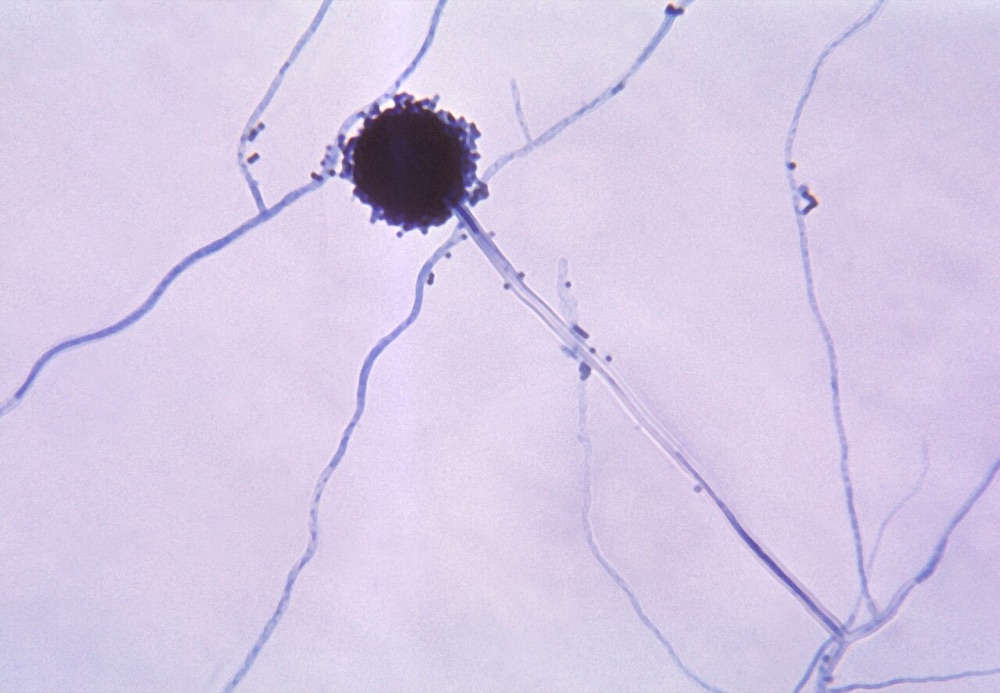
Depth outranks colour in every case. A dark patch confined to the pile is a cleaning job, and a pale bloom rising from the backing is a replacement, whichever species either turns out to be.
Household members reacting to the room, with congestion, coughing, itchy eyes, or asthma that worsens near the carpet, add urgency independent of what the colony looks like. The symptoms associated with mold toxicity cover the wider pattern worth watching, and the free visual contrast sensitivity screen measures a neurological marker of biotoxin exposure in about fifteen minutes for anyone who wants a data point rather than a guess.
Mold in car carpet
Vehicle carpet grows mold for its own reasons: a sunroof drain blocked with leaves, a door seal past its life, a window left open in rain, or a wet umbrella left in the footwell of a car parked for a week. The enclosed cabin accelerates everything, since heat and trapped humidity turn a car into an incubator. Treatment follows the same sequence as household carpet, vacuum, vinegar, long dwell, forced drying with doors open, with one difference. Car carpet is glued over foam and metal rather than laid over padding, so soaked underlayment means removing the carpet for proper drying, a job trim shops handle routinely. Finding and fixing the water entry point comes first, because a cabin that leaks will regrow whatever gets cleaned.
Our guide to mold in a car traces each leak point by where the damp patch sits, and covers the AC evaporator, seats and headliner.
Preventing carpet mold
Prevention combines humidity control, material choice, and response speed. Keep indoor relative humidity between 30 and 50 percent, using a dehumidifier through damp seasons and a hygrometer to track the number. Vacuum with a HEPA machine weekly, since the spore load resting in the pile is the seed stock every future wetting event draws on. When buying or replacing, materials shift the odds: synthetic fibres such as nylon and polypropylene resist colonisation far better than natural fibres and jute backings, which are food, and mold-resistant padding with antimicrobial treatment or closed-cell rubber construction holds up where standard open-cell foam fails first. Choose hard flooring for the rooms that fight soft flooring, meaning bathrooms, unfinished basements, and slab floors with a damp history. Respond to every wetting event with same-day drying rather than a towel and patience. A carpet that develops a musty smell each time humidity rises has already answered the question of where the problem lives, and lifting a corner confirms it faster than another season of deodorising.
Two free tools here do the arithmetic behind that first step: the dehumidifier size calculator gives the capacity a room needs from its dimensions and dampness level, and the dew point calculator shows whether the air in a basement is already condensing onto the slab beneath the carpet. For the spores a carpet keeps re-launching into the air while you work on it, our air purifier for mold guide covers which units carry enough filtration to matter.
If a carpet has been damp for a season and you have had fatigue, congestion or brain fog that eases away from the house, the Visual Contrast Sensitivity test measures a neurological effect of biotoxin exposure. Free, in your browser, about 15 minutes.
Frequently asked questions
Can moldy carpet be saved?
Yes, when growth is confined to the surface pile, the area is under roughly 10 square feet, the backing and underlay are dry, and any wetting lasted less than 48 hours. Growth in the backing or underlay, larger areas, or a soaking that lasted days means replacement, and wet padding is replaced in every scenario.
What kills mold in carpet?
Undiluted white vinegar worked into the pile and left for an hour kills most household species, with 3 percent hydrogen peroxide as the colour-safe alternative at a fifteen-minute dwell. HEPA vacuuming before and after removes spores, and 24 hours of forced drying completes the treatment. Bleach damages fibre and adds water to the backing without reaching roots.
Is mold in carpet dangerous?
Carpet acts as a reservoir, and every footstep re-launches spores and fragments into the air at the height children breathe. Congestion, coughing, irritated eyes, and worsening asthma that track time spent in the carpeted room are the common effects, arriving soonest in children, older adults, and anyone with a weakened immune system.
How do I know if mold is under my carpet?
Pull a corner off the gripper strip and inspect the underside of the backing and the padding below. A musty smell that survives vacuuming, a damp feel underfoot, and allergy symptoms concentrated in one room all point downward, and on concrete slabs growth usually starts from beneath.
Does steam cleaning get rid of carpet mold?
Steam kills surface mold effectively, with tested spore reductions above 99 percent, and simultaneously soaks the carpet in the moisture mold needs. Forced drying within a day preserves the result. Steaming a carpet with suspect backing or padding drives hot moisture into the colonised layer and worsens the problem.
Should carpet be replaced after a flood?
Carpet touched by sewage or rising floodwater is replaced without exception, since Category 3 water carries contamination that cleaning does not address. Clean-water soakings are survivable when the carpet is lifted and fully dried within 48 hours, though the padding underneath is replaced regardless.
Why does my carpet smell musty after cleaning?
Either the carpet never fully dried, which restarts growth within days, or the odour source was never in the pile. Backing, padding, and the floor beneath hold colonies that surface cleaning cannot reach, and a smell returning after every cleaning is the clearest sign the problem sits below the carpet rather than in it.
Test Yourself Against Mold Toxicity
The Visual Contrast Sensitivity test measures a neurological effect of biotoxin exposure that most people cannot notice on their own. Free, online, and under 15 minutes.