Best Air Purifier for Off-Gassing: 6 That Trap VOCs and Formaldehyde
Quick answer
The best air purifier for off-gassing is the one with the most activated carbon, measured in pounds rather than grams. The Austin Air HealthMate Plus carries about 15 pounds and is the strongest all-rounder.
For formaldehyde specifically, carbon treated with potassium permanganate works far better than plain carbon, which is why the IQAir HealthPro Plus, AirDoctor AD5500 and Airpura F600 stand out. HEPA alone removes none of these chemicals.
Published October 1, 202613 min readEvidence-based
A new sofa, a fresh mattress, new flooring or a freshly painted nursery can make a home feel brand new. That clean, new smell comes from the materials themselves, as they release chemicals into the air for days, weeks and sometimes months.
Those chemicals are volatile organic compounds, and formaldehyde is often among them. In a closed room, they build up to the point where some people get headaches, stinging eyes or a scratchy throat.
You may have opened the windows, lit a candle to cover it, or started sleeping on the sofa until the bedroom smell fades.
But can an air purifier for off-gassing actually pull these chemicals out of the air, or does it just move them around the room?
Off-gassing is the slow release of chemicals from materials that were glued, pressed, foamed, finished or painted. The same resins and solvents that make a product cheap to manufacture and quick to set keep escaping into the air once it’s unwrapped.
Pressed wood
Particleboard, MDF and plywood in cabinets, flat-pack furniture and bed frames, often bonded with urea-formaldehyde resin.
Foam
Memory foam mattresses, sofa cushions and upholstered chairs.
Floors and walls
New carpet, vinyl and laminate flooring, adhesives, paint, varnish and wood stain.
Whole buildings
New construction and major renovations, where all of the above arrive at once.
Formaldehyde draws the most concern. It irritates the eyes, nose and throat at low levels, and pressed wood keeps releasing it long after the new smell has gone. Benzene, toluene, xylene and dozens of other VOCs come from foams, finishes and adhesives.
Emissions peak in the first days and weeks, then drop off. Pressed wood products can keep releasing low levels of formaldehyde for months or years, and a warm, humid room releases more than a cool, dry one.
The symptoms overlap with other indoor air problems, which is why sick building syndrome often starts in a newly fitted office or a fresh renovation.
What an air purifier needs to remove VOCs and formaldehyde
Most air purifiers are built to catch particles: dust, pollen, pet dander and smoke. A HEPA filter traps those well, but VOCs and formaldehyde are gases, and gas molecules pass straight through it.
Activated carbon
Gases are removed by adsorption, where the molecules stick to the enormous internal surface of activated carbon. The more carbon a purifier holds, the more chemicals it can capture before the filter fills up. That’s why carbon weight is the specification to check first.
A thin carbon-coated sheet, which is what most mid-priced purifiers carry, holds only a few grams. It saturates quickly during heavy off-gassing. A deep bed of granular or pelleted carbon, measured in pounds, lasts months and keeps working through the worst of it.
Treated carbon for formaldehyde
Formaldehyde is a very small, light molecule, and plain activated carbon holds on to it poorly. Carbon or alumina treated with potassium permanganate reacts with formaldehyde and locks it in chemically, a process called chemisorption. Laboratory research has found that this treatment significantly increases how much formaldehyde the carbon can hold.
Enough airflow for the room
A purifier can only clean the air that passes through it. Most manufacturers publish a clean air delivery rate (CADR) for particles but not for gases. The quoted room size is a practical guide, and a unit rated for a larger space than yours works faster and quieter.
A HEPA filter as well
Off-gassing rooms usually have plenty of dust and fine particles too, so a unit that combines HEPA and heavy carbon handles both. Every purifier below does.
How we chose these purifiers
Each purifier here was chosen from its manufacturer specifications, filter composition and, where available, independent testing. Carbon weight came first, the same test we apply to an air purifier for mold, followed by the type of media and whether it’s treated for formaldehyde.
We then checked the room size, filter life and whether the unit emits ozone. Units that rely on ionizers, photocatalytic oxidation or ozone were left out. We didn’t run lab tests ourselves, and carbon weights come from the manufacturers or from independent reviewers who weighed the filters.
Buyer ratings come from the live Amazon listings as of October 2026.
The 6 best air purifiers for off-gassing
Treated carbon for formaldehyde sets the first three apart. The last three trade some of that depth for a lower price, a quieter room or a bigger space.
1. Austin Air HealthMate Plus
Strongest all-rounder
Carbon
~15 lb
Media
Potassium iodide
Room
1,500 sq ft
Rating
4.2 (230+)
The HealthMate Plus carries about 15 pounds of activated carbon and zeolite, more than almost any other home air purifier. The carbon is impregnated with potassium iodide to broaden the range of chemicals it holds, including formaldehyde, and it surrounds a medical-grade HEPA filter.
It’s a plain steel cabinet with a fan and a dial, with no screens, sensors or ionizers. Austin rates it for rooms up to 1,500 square feet, and the filter lasts up to five years.
It’s heavy and louder than modern units on high, and it looks like hospital equipment. For a new build, a full room of new furniture or someone sensitive to chemicals, it’s the unit with the deepest reserve of carbon.
The HealthPro Plus pairs the finest particle filtration here with a dedicated gas cartridge. Its V5-Cell holds about 5 pounds of granular activated carbon and alumina pellets impregnated with potassium permanganate, which targets formaldehyde and other aldehydes directly.
The HyperHEPA filter captures particles down to 0.003 microns, and IQAir rates the unit for rooms up to 1,125 square feet. The V5-Cell lasts up to two years, and the Swiss-made unit carries a 10-year warranty.
It’s the most expensive unit here to buy, and it’s large. For heavy chemical sensitivity, IQAir also makes the GC MultiGas, with around 12 pounds of gas-phase media.
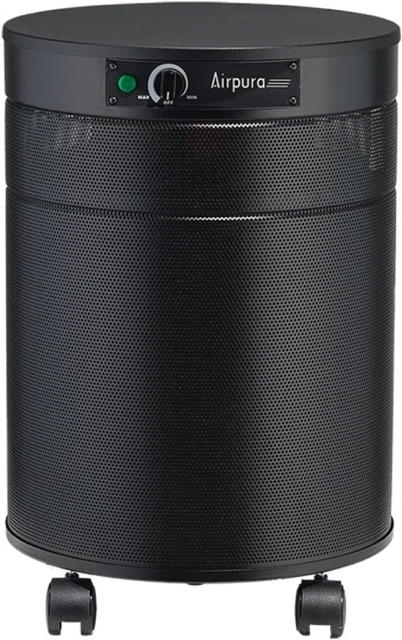
The F600 was designed around formaldehyde. It holds about 18 pounds of activated coconut-shell carbon enhanced with potassium permanganate, alongside a HEPA-barrier filter, and the carbon bed is rated to last around two years.
Airpura rates it for spaces up to 2,000 square feet at two air changes an hour. The steel cabinet is made in Canada, and the fan moves up to 560 cubic feet per minute before the filters.
Few buyers have rated it on Amazon, so its reputation rests on specifications and specialist retailers. For a new build full of pressed wood cabinets and flooring, no unit here holds more treated carbon.
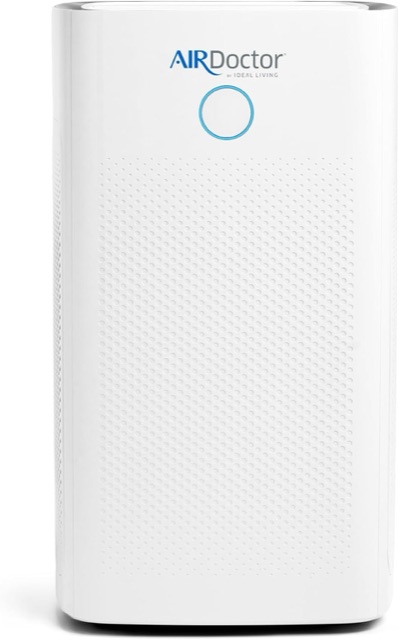
The AD5500 is built for large, open spaces. Its carbon filters combine activated carbon with potassium permanganate, reported at around 3.8 pounds in total, and AirDoctor says the filters are tested specifically against formaldehyde.
The UltraHEPA filter captures particles down to 0.003 microns. AirDoctor says the unit cleans about 1,000 square feet in 15 minutes, which makes it a strong choice for an open-plan living area with new flooring throughout.
Its carbon filters last up to around six months, so running costs are higher than the Austin or IQAir during heavy off-gassing.
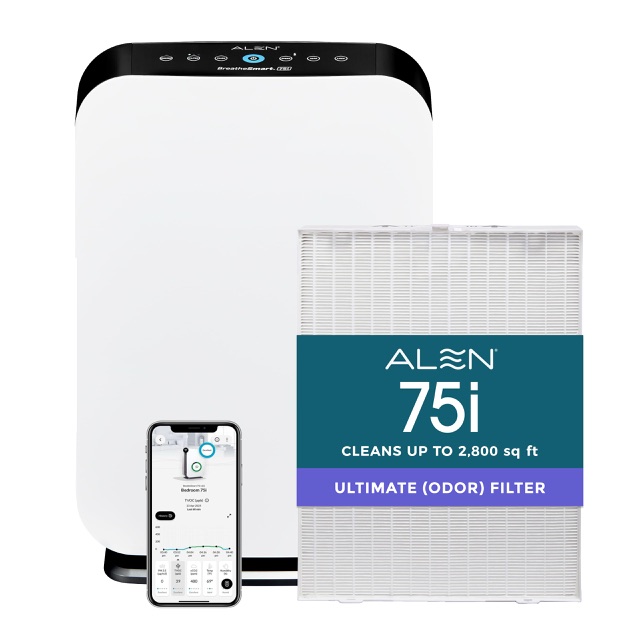
The 75i is a quiet large-room purifier, and its Fresh filter turns it into a genuine VOC unit. That filter packs about 3.6 pounds of activated carbon around an H13 HEPA layer.
A built-in sensor adjusts the fan to the air quality, and the unit looks at home in a living room. Alen quotes coverage up to 2,800 square feet.
The carbon is untreated, so it’s stronger on paint, foam and adhesive VOCs than on formaldehyde. The Fresh filter must be chosen specifically, since the standard Pure filter carries no carbon at all.
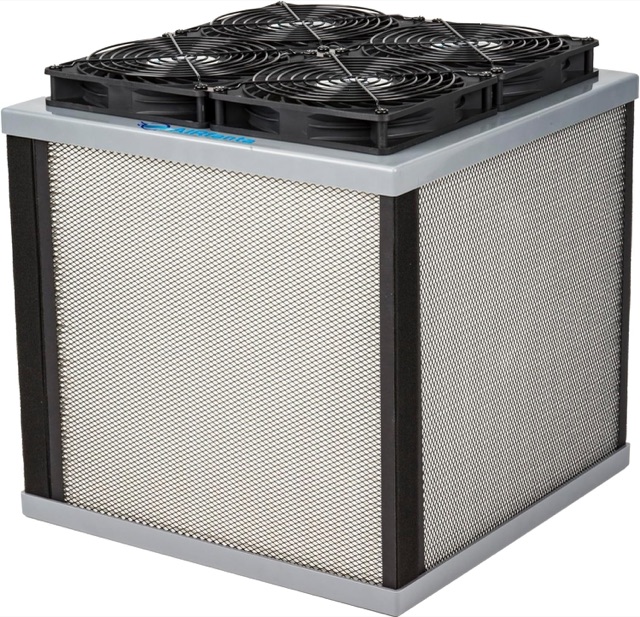
The 3Pro is the budget pick that still carries real carbon. Its four filters combine an E11 particle layer with about 600 grams of activated carbon pellets, far more than most purifiers at its price.
Four computer fans push a large volume of air quietly, and it folds flat enough to fit in a suitcase. It’s UL and CARB certified.
The E11 filter is a step below true HEPA, and the carbon is untreated. For a single bedroom with a new mattress or a freshly painted room, it does a remarkable amount for the money.
As an Amazon Associate we earn from qualifying purchases, at no extra cost to you.
Which purifier for which situation
A new mattress or furniture in one bedroom.
The AirFanta 3Pro or the Alen 75i with the Fresh filter handles a single room well. Moving the purifier close to the new item and closing the door concentrates its work.
A nursery with a new crib mattress or fresh paint.
The Austin Air HealthMate Plus or IQAir HealthPro Plus, because both combine heavy carbon with formaldehyde-treated media. Airing the room for a week or two before the baby sleeps there helps as much as the purifier.
A new build or major renovation.
The Airpura F600 or the Austin Air, run in the rooms with the most pressed wood. The AirDoctor AD5500 suits an open-plan ground floor.
Chemical sensitivity.
The IQAir HealthPro Plus, or its GC MultiGas sibling, and the Austin Air. People who react strongly to chemicals often need both heavy carbon and treated media, running around the clock.
How to clear off-gassing faster
A purifier works best alongside a few simple steps that cut how much gas enters the room in the first place.
1Unbox outside. Taking new furniture, mattresses and rugs out of their plastic in a garage, porch or well-ventilated spare room lets the first wave of emissions escape outdoors.
2Air new items for several days. A mattress stood on its side in a ventilated room for 48 to 72 hours releases much of its initial smell before anyone sleeps on it.
3Keep windows open when you can. Fresh air dilutes VOCs faster than any purifier. Cross-ventilation with two windows open works best.
4Keep the room cool and dry. Heat and humidity speed up formaldehyde release. One laboratory study found emissions rose 1.9 to 3.5 times with a 10°C temperature increase, and 1.8 to 2.6 times with a 35% rise in humidity. Air conditioning and a dehumidifier both slow emissions.
5Run the purifier on high for the first weeks. The heaviest off-gassing happens early, so maximum airflow then pays off most. Lower speeds suit the months afterwards.
6Place it near the source, with space around it. A purifier a few feet from the new sofa or bed, with clear space on every side, catches the chemicals before they spread.
7Replace carbon on time, or sooner. Carbon fills up faster during heavy off-gassing. A saturated filter stops capturing gases, and the EPA notes it can release them back into the air.
Purifiers that can make the air worse
Some air cleaning technologies add chemicals to a room that’s already full of them.
Ozone generators
Ozone reacts with VOCs from furniture and fragrances to form new compounds, including formaldehyde. California bans ozone generators sold as air cleaners, and the EPA warns that no federal agency has approved them for occupied spaces.
Ionizers and plasma modes
Many produce ozone as a byproduct. On units that include one, switching it off keeps the carbon and HEPA doing the work.
Photocatalytic oxidation (PCO)
These systems break down VOCs with UV light and a catalyst, but incomplete reactions can create new chemicals. A CARB review found some PCO air cleaners produced formaldehyde and acetaldehyde.
Thin carbon filters
A purifier sold as removing "odors and VOCs" with a thin carbon mesh saturates within weeks of heavy off-gassing. It’s fine for dust but won’t keep up with a new mattress or fresh paint.
Houseplants
Plants look lovely, but studies of real rooms have found they remove far too little VOC to make a noticeable difference. Ventilation and carbon do the heavy lifting.
When the symptoms outlast the smell
Headaches, stinging eyes and fatigue from off-gassing usually ease within weeks, as emissions fall and a good purifier catches what’s left. Symptoms that carry on after the smell has gone point to another source.
A damp building is the most common one. Mold releases its own gases, and a musty smell in the house is a different signal from the sharp, chemical smell of new furniture. For growth you can see or smell, the same heavy-carbon purifiers help, alongside fixing the damp that feeds it.
The screening runs in your browser and takes about fifteen minutes from calibration to result.
Yes, if they carry enough activated carbon. Carbon adsorbs VOCs and, when treated with potassium permanganate, formaldehyde. A HEPA-only purifier does nothing for off-gassing, because the chemicals are gases rather than particles.
What is the best air purifier for off-gassing?
The Austin Air HealthMate Plus, with about 15 pounds of impregnated carbon and zeolite. The IQAir HealthPro Plus and Airpura F600 are the strongest alternatives for formaldehyde, and the AirFanta 3Pro is the best budget option.
What is the best air purifier for formaldehyde?
One with carbon or alumina treated with potassium permanganate, such as the Airpura F600, IQAir HealthPro Plus or AirDoctor AD5500. Plain activated carbon holds formaldehyde poorly because the molecule is so small, and a study of permanganate-treated carbon found the treatment significantly raised its formaldehyde capacity.
Does a HEPA filter remove VOCs?
No. HEPA filters capture particles such as dust and pollen. VOCs and formaldehyde are gases, which pass straight through a HEPA filter and need activated carbon to remove.
How long does off-gassing last?
Most of the smell fades within a few days to a few weeks. Formaldehyde from pressed wood can continue at low levels for months or even years, especially in warm, humid rooms.
How much activated carbon does an air purifier need?
For noticeable off-gassing, a pound or more is a sensible starting point, and several pounds suit a whole room of new furniture or a new build. Units with several pounds of carbon keep working through the peak, while thin carbon sheets saturate in weeks.
Where should I place an air purifier for off-gassing?
A few feet from the new furniture, mattress or flooring, with clear space around it and the door closed. Running it on high for the first few weeks clears the heaviest emissions.
Are air purifiers with ionizers safe for off-gassing?
Ionizers and similar technologies can produce ozone, which reacts with VOCs to form new chemicals, including formaldehyde. An air purifier for off-gassing works best on carbon and HEPA alone, with any ionizer switched off.